

Nature and Spirit Beings
Their Influence on Our Visible World
GA 98
4 December 1907, Munich
Translate the original German text into any language:
Versions Available:
Nature and Spirit Beings, tr. Heymanns
8. Die Elementarreiche, ihre Wesensarten und ihre Wirkungen
8. The Elemental Kingdoms of Nature
[ 1 ] Was man seit alten Zeiten die Elementarreiche zu nennen gewohnt worden ist, ist nicht so leicht verständlich, wie man nach einer oberflächlichen Betrachtung gewöhnlich denkt. Denn es gehören diese Elementarreiche zu dem, was hinter der Wahrnehmungswelt liegt, hinter dem, was den Sinnen sich unmittelbar aufdrängt.
[ 1 ] What has been generally designated as the Elemental Kingdoms, since the earliest times, is not so easy to understand as we are apt to imagine after a superficial examination. For these Elemental Kingdoms belong to what lies behind the world which we generally perceive—behind the world which forces itself immediately upon our senses.
[ 2 ] Am besten verschaffen wir uns den Eingang zu der Betrachtung, wenn wir ausgehen von dem, was sinnlich anschaulich ist, von denjenigen Reichen, die in der Sinnenwelt der menschlichen Beobachtung vorliegen. Da haben wir vier Reiche vor den Sinnen um uns herum auf dem physischen Plan ausgebreitet: das Mineralreich, das Pflanzenreich, das Tierreich und das Menschenreich. Das ist das, was jeder kennt. Nun wollen wir uns klarwerden darüber, was man genau als diese vier Reiche bezeichnet, weil die genauere Begriffsbestimmung keineswegs ein jeder klar übersieht. Darum ist es auch nicht so leicht, zu dem Verständnis des ersten, zweiten und dritten Elementarreichs vorzudringen. Gerade wenn man über solche schwierigen Dinge redet, muß man von vornherein darauf achten, daß man zu keinem wirklichen Ziele kommt, wenn man glaubt, einen Begriff, den man einmal hingepfahlt, den man einmal eingeschachtelt hat, den könne man nun in dieser Einschachtelung auch beibehalten. In der physisch-sinnlichen Welt geht das noch; da stehen die Dinge nebeneinander, sind hübsch gegeneinander abgegrenzt, wie ein Buch, eine Kreide, eine Rose, da können wir dabei bleiben, dieses einzelne Ding mit dem Begriff zu belegen. Wenn wir einen Gegenstand benannt haben, dann dürfen wir darauf rechnen, daß wir etwas Bestimmtes, Abgegrenztes haben. Gehen wir aber zum Astralplan, der an unsere Welt direkt angrenzt, sie als nächster durchdringt, da ist das nicht mehr so: da ist eine Welt ewiger Beweglichkeit. Betrachten Sie den Astralleib des Menschen, das, was als die Aura den Menschen umflutet und der Ausdruck ist für Triebe, Begierden und so weiter, so sehen Sie, daß dieser Astralleib des Menschen in einem fortwährenden Auf- und Abfluten von Farben und Formen ist, die sich in jedem Augenblick verändern: neue Farben glänzen auf, andere verschwinden. Das ist so beim Menschen. Nun gibt es Wesen, die schwirren auf der Astralebene herum. Ihre Astralleiber gehören nicht zu einem physischen Körper, doch sind sie nicht weniger veränderlich und wechselnd, sie sind in jeder Sekunde von anderer Form, Farbe und Leuchtkraft. Alles ist auf diesem Astralplan der fortwährende Ausdruck dessen, was das Innere dieser Wesen ist. Wir würden schon sehr in die Enge kommen, wenn wir dort unsere Begriffe so starr und unveränderlich machen wollten wie für den physischen Plan; wir müssen uns der Beweglichkeit der Gestalten anpassen, wir müssen bewegliche Begriffe haben, einen Begriff bald in dieser, bald in jener Weise anwenden können.
[ 2 ] We can understand such things in the best way, if we proceed from what we can perceive through our senses—from the kingdoms of the sense-world, which are accessible to human observation. Here, in the physical sense-world, four kingdoms are spread out before our senses: the mineral kingdom, the plant kingdom, the animal kingdom, and the kingdom of man. This is common knowledge. Let us now try to form some clear idea as to the precise nature of these four kingdoms; for this is by no means clear to everyone. And for this same reason, it is also not so easy to gain an insight into the first, second and third elemental kingdoms. It is precisely when we speak of such difficult matters, that we must take great care, from the very outset, to realize that no true goal can be reached, if we believe that a concept which we have, as it were, driven like a stake into the ground, once formed it can be left rooted in this place. This may still be possible within the physical sense-world, for here, things stand one beside another; there is a division between them, just as this book, this piece of chalk, a rose, etc., are distinct and separate from one another. It is possible, in this case, to apply a term to a single object, for when we have named something, we can be sure that we have before us something distinct and limited. If, however, we went to the astral plane, that world which is immediately beyond our own, and permeates it, as the one nearest to it, we find that this no longer holds true, for the astral world is one of eternal movement. If you observe the astral body of man, which floats around him as his aura and is the expression of his desires and passions, etc., you will see that this astral body of man is in a constant motion—it is an ebb and flow fall of colours and forms, which change at every moment, for new colours shine forth and others disappear. This is what we find in the case of man. But there are other Beings which whirl about on the astral plane. Their astral bodies do not form part of a physical body, although they are no less changeable and variable, for at every moment they have a different shape, colour, or luminous force. Everything on the astral plane is the continual expression of the inner nature of these Beings. We would, indeed, find ourselves in a difficult position if we were to apply to the astral plane the rigid, unchangeable concepts of the physical world. We must learn instead to adapt ourselves to the mobility of these shapes—we must acquire mobile concepts. We should be able to use a concept, once in this way, and once in that.
[ 3 ] Das ist noch in viel höherem Maße in den noch höheren Welten der Fall. Für eine höhere Weltbetrachtung ist alles das, was auf der physischen Welt ist, ein Ausdruck für die Kräfte und Wesenheiten jener höheren Welten. In allem, was wir ringsherum sehen, sind solche Kräfte und Wesenheiten verborgen. Das macht gerade die Verschiedenheit der Wesen in der physischen Welt aus. Sie sehen um sich herum zum Beispiel das Mineralreich; alle anscheinend leblosen Wesen auf unserer Erde, alle Mineralien, gehören dazu. Man sagt Ihnen zunächst, diese Mineralien auf der Erde hätten für sich keinen Ätherleib, keinen Astralleib, kein Ich. Das gilt aber nur für die physische Welt. Man muß das wissen, damit man zur Klarheit kommt über das, was auf dem physischen Plane ist. Kommt nun aber jemand und sagt: Das Mineral ist etwas, was nur einen physischen Leib hat -, so ist das ebenso falsch, wie es richtig ist, wenn jemand sagt: Das Mineralreich ist etwas, was auf dem physischen Plane nur einen physischen Leib hat. - Denn für die wirkliche, geistige Betrachtungsweise ist das Mineral so, daß es hier auf dem physischen Plan seinen physischen Leib hat und nichts sonst. Wollen wir den Ätherleib suchen, so müssen wir bis zum Astralplan hinaufsteigen; da ist der Ätherleib zu finden. In dem Augenblick, wo der Mensch astralischer Hellseher wird, sieht er auf dem Astralplan den Ätherleib des Minerals und hier auf dem physischen Plan nur dessen physischen Leib. Und weiter umfassend betrachtet, hat das Mineral auch einen Astralleib; aber dieser ist nicht auf dem Astralplan zu finden, sondern man muß ihn in den niederen Partien des Devachans suchen. Im höheren Mentalplan, im Arupa-Mentalplan ist das Ich des Minerals; von da aus wird das Mineral von seinem Ich dirigiert. Wollen Sie sich das in grober Weise vorstellen, so müssen Sie sich sagen: Ich denke mir einen Menschen, der hellsehend ist bis zum Devachanplan. Für diesen Hellseher, der auf dem Arupaplan noch sieht, erscheinen die Mineralien ähnlich den Nägeln der Menschen, denn die Mineralien sind gleichsam die Nägel von Wesen, die auf dem oberen Devachan ihr Ich haben. Sie können sich die Nägel gar nicht ohne den Menschen vorstellen; so ist es auch mit dem Mineral und seinem Ich.
[ 3 ] This is true of the higher worlds to a still greater degree. If we consider the world from a higher standpoint, we find that everything on the physical plane is an expression of forces emanating from these higher worlds. In everything we see about us, such forces and beings lie concealed. It is precisely what accounts for the great diversity among the beings of the physical world. Observe, for instance, the mineral kingdom. All apparently lifeless beings, all minerals, belong to this kingdom. You are told, to begin with, that these minerals on the Earth have no etheric body of their own, no astral body and no Ego. But this is true only within the physical world. We must know this, in order to reach a clear conception of what actually takes place upon the physical plane. But let us now suppose that someone were to say: “The mineral is something which has nothing but a physical body.” This statement is exactly as false, as on the other hand—it would be true, were someone to say: “The mineral kingdom is something which has, upon the physical plane, only a physical body.” For, in the light of a genuine spiritual method of observation, we find that here, upon the physical plane, the mineral has a physical body, but nothing more. If we wish to find its etheric body, we must ascend to the astral plane: there, its etheric body is to be found. The moment that a human being becomes astrally clairvoyant, he is able to see the etheric body of the mineral—there, on the astral plane—and here, on the physical plane, he sees merely its physical body. If we extend our observations still further, we find that the mineral has also an astral body. This body cannot be found, however, upon the astral plane, but must be sought in the lower regions of Devachan.1Devachan - Mental plane - Theosophical term for the spiritual world. Only in the higher Mental plane, in the Arupa-Mental2Arupa - Mental plane - the upper or higher spiritual world; Rupa - Mental plane - the low or lower spiritual world. plane, do we find the Ego of the mineral—and it is from here, that the mineral is directed by its Ego. If you wish to form a rough picture of this, you must say to yourselves: I will try to imagine a human being, whose clairvoyance reaches as far as the higher Devachan. To such a clairvoyant, who is able to see into Arupa, the minerals will appear like the fingernails of the human being—because the minerals are as it were the nails of Beings whose Ego dwells in higher Devachan. It is not possible to think of the fingernails without the human being; the same thing applies also to the minerals.
[ 4 ] Betrachten wir hier auf der Erde einen Bergkristall: sieht man von ihm weg, so ist dort in der Astralwelt der Ätherleib, der den physischen Leib belebt. Aber Sie würden dort nicht wahrnehmen können, daß dem Mineral irgend etwas wehe tut, wenn Sie ihm etwas zufügen. Im Devachan erst finden Sie Lust und Freude, Leid und Schmerz des Minerals, aber ganz anders, als man es sich gewöhnlich vorstellt. Das Schmerzempfinden des Minerals ist nicht so wie bei den Tieren; man muß sich nicht vorstellen, daß das Mineral Schmerz fühlt, wenn man es zerhämmert und zerschlägt. Wenn in einem Steinbruche die Arbeiter die Mineralien zersplittern, sie scheinbar schädigen, so ist das im Devachan geradezu ein Wohlgefühl, ein Wollustgefühl für die Mineralien. Es ist für sie also gerade umgekehrt wie im Menschen- und Tierreich. Wenn Sie auf den Devachanplan kommen, so können Sie dort den Geistern der Mineralien begegnen. Doch gehört da zu einer mineralischen Persönlichkeit nicht nur ein Mineral, sondern ein ganzes System, wie auch Ihre einzelnen Fingernägel keine besonderen Seelen haben. Wenn jemand sich vorstellen wollte, daß alles Astrale auf dem Astralplan sein müßte, so wäre er auf dem Irrweg. Es liegt so nahe, das Astrale immer auf dem Astralplan zu suchen; es ist aber wohl zu unterscheiden zwischen der inneren Natur einer Wesenheit und der Umgebung, in der sie lebt. Gerade wie Ihr Ich keine physische Natur hat und doch auf dem physischen Plane lebt, so lebt der Astralleib des Minerals nicht auf dem Astralplan, sondern in dem niederen Devachan. Wir dürfen die Begriffe nicht schematisch nehmen, sondern wir müssen uns durcharbeiten zu der genaueren Bestimmung der Dinge.
[ 4 ] Let us suppose that we observe a rock-crystal here on Earth. If we now look away for a moment, to the etheric body, which animates the physical body, there, in the astral world. Yet it would not be possible to perceive there, that any injury caused to the mineral, also causes it pain. The joy and gladness, pain and suffering of minerals can only be found on the Devachan plane—but entirely differently from the way in which we usually imagine this. A mineral's sensation of pain is not like that of an animal; we must not think that a mineral feels pain when we hammer it and break it into pieces. When workmen in a quarry break stone and they seem to harm it, this actually gives rise to a feeling of pleasure upon the Devachan plane—it is a true delight for the minerals. Thus, in their case, we find the very opposite of what takes place in the kingdom of man and in the animal kingdom. On the Devachan plane you can encounter the spirits of the minerals. Yet it is not merely one mineral which belongs, as it were, to a mineral personality, but rather a whole system—just as your fingernails do not each possess a separate soul. If someone were to imagine that everything of an astral nature must be found upon the astral plane, he would be under a delusion. It seems, of course, natural to look for the astral element upon the astral plane—nevertheless, the inner nature of a Being must be distinguished from the environment in which it lives. Just as your Ego has no physical nature, and lives nevertheless on the physical plane, so the astral body of the mineral does not live on the astral plane but in lower Devachan. We should not form schematic concepts, but must rather work our way through to a more precise determination of things.
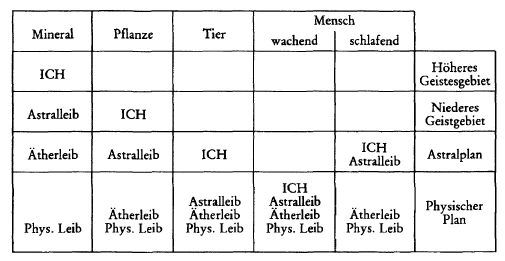
[ 5 ] Nehmen wir jetzt die Pflanze, wie sie uns vorliegt; sie hat hier auf dem physischen Plan den physischen Leib und den Ätherleib. Die beiden hat sie hier, wo aber müssen Sie den Astralleib der Pflanze suchen? - In der astralischen Welt, und das Ich in den unteren Partien des Devachan. Gehen wir weiter, zum Tier hinauf. Das Tier hat in der physisch-sinnlichen Welt den physischen Leib, den Ätherleib und den Astralleib, aber das Ich hat es auf dem Astralplan. Das heißt, wie Sie dem Menschen hier als Person begegnen, als Einzelperson abgeschlossen, so finden Sie die tierischen Iche auf dem astralischen Plan als abgeschlossene Persönlichkeiten. Wir haben sie so aufzufassen: Alle Gruppen, die gleiche Gestalten haben, haben ein gemeinsames Ich. Der Mensch unterscheidet sich dadurch von ihnen, daß ein jeder ein individuelles Ich hat. Auf dem Astralplan sind das Löwen-Ich, das Tiger-Ich und so weiter; da sind sie abgeschlossene Wesenheiten; die einzelnen Gattungs-Iche bevölkern den astralischen Plan geradeso wie die Menschen die physisch-sinnliche Welt. Für den Menschen aber gilt, daß für ihn herabgestiegen ist physischer Leib, Ätherleib, Astralleib und Ich bis auf den physischen Plan. Aber nur im Wachzustande; beim schlafenden Menschen ist das anders. Da ist in der physischen Welt der physische Leib und der Ätherleib, auf dem Astralplan der Astralleib und das Ich. So verteilt sich die viergliedrige menschliche Wesenheit im Schlafzustande auf den physischen Plan und den nächsthöheren, den Astralplan. Der Mensch ist dann auf dem physischen Plan vom Werte einer Pflanze (siehe Schema S. 134).
[ 5 ] Let us now observe the plant, just as we see it before us. Here, on the physical plane, it has its physical body and its etheric body. It has these two bodies on the physical plane—but where are we to look for the astral body of the plant? We shall find it in the astral world—and the Ego, in the lower Devachan. Let us now go a step further, to the animal. The animal has, in the physical sense-world, a physical body, an etheric body, and an astral body—but its Ego is on the astral plane. That is to say: just as, here on the earth, we encounter the human being as an isolated person, as a single individuality, so you will find the Egos of the animals, as complete, self-contained personalities, on the astral plane. We must think of this in the following way: All groups of animals which have a similar form, have also a common Ego. Man, therefore, distinguishes himself from the animals, owing to the fact that every human being has an individual Ego. On the astral plane, we find for instance, the Ego of the lions, the Ego of the tigers, etc. There, they are single, self-contained Beings; the single animal group-egos inhabit the astral plane just as the human beings inhabit the physical-sensory world. For the human being it is true that for him the physical body, the etheric body, the astral body and the Ego have descended as far as to the physical plane. This is true, however, only when the human being is awake—when he is asleep it is otherwise. The physical and etheric bodies are then in the physical world, whereas the astral body and the Ego are on the astral plane. Thus, during sleep, the fourfold human being is separated into parts, and is to be found partly on the physical plane and partly on the one directly above this—the astral plane. On the physical plane, the human being is then of the same value as a plant (see table below).

[ 6 ] Nun haben wir schon hier kennengelernt die verschiedene Art, wie wir die Ausdrücke «astralisch» und so weiter anwenden müssen. Wir kommen erst zu einem durchgreifenden Verständnis, wenn wir uns klar sind, daß die Dinge sich nicht umherschieben lassen wie Figuren auf dem Schachbrett. Wenn wir nun den Menschen selbst betrachten, so müssen wir diesen Menschen in der folgenden Weise ansehen. Wir haben den physischen Leib, den Äther- und Astralleib und das Ich. Öfter ist es hier schon betont worden, daß es darauf ankommt, daß wir uns über das Verhältnis der vier Glieder nicht im Unklaren sind. Man denkt leicht, der physische Leib sei der unvollkommenste und der niedrigste. In einer gewissen Beziehung aber ist er der vollkommenste, denn er hat vier aufeinanderfolgende Entwickelungsstufen durchgemacht: auf dem Saturn, der Sonne, dem Monde und der Erde. Der Ätherleib hat nur drei Grade der Vollkommenheit erreicht, er kam erst auf der Sonne zum physischen Leib hinzu; er soll einst höher steigen, obwohl er heute noch nicht so vollkommen ist wie der physische Leib. Der astralische Leib kam erst auf dem Mond hinzu, er hat nur einen zweifachen Vollkommenheitsgrad erreicht. Das Ich ist das «Baby» unter den vier Gliedern des Menschen, es ist erst auf der Erde hinzugekommen, es steht erst im Anfang seiner Entwikkelung; es wirkt fortwährend korrumpierend auf die anderen Leiber. Wer als Anatom den wunderbar organisierten physischen Körper betrachtet, der staunt über die Vollkommenheit des Herzens und des Gehirns. Wie unvollkommen sind dagegen die Begierden, die Triebe des Ich! Das Ich hat Begierde nach Wein, Bier und so weiter, die zerstörend wirken das ganze Leben hindurch, und doch hält der physische Leib jahrzehntelang stand gegen diese Angriffe. Nun müssen wir uns einmal klarmachen, wie das Ich hineingearbeitet worden ist in den physischen Leib und wie dieser zuerst entstanden ist.
[ 6 ] Now we have already learned to know, in previous lectures, the various ways in which the expressions “astral”, etc. must be used. But we shall only attain a comprehensive insight, if we realize clearly that these things cannot be pushed around like pieces on a chessboard. If we study the human being, we must observe him quite precisely, in the following way: We find in him the physical body, the etheric body, the astral body, and the Ego. It has often been emphasized here, how very important it is to form a clear conception concerning the relation of these four members. It is very easy to imagine that the physical body is the most imperfect and the lowest of these. From a certain aspect, however, it is the most perfect of all—for it has passed through four successive stages of evolution—on (ancient) Saturn, Sun, Moon, and on the Earth. The etheric body has only reached its third stage of perfection, for only on the Sun it was added to the physical body. In the future, it will indeed rise to a higher stage—although at present, it is not yet as perfect as the physical body. The astral body was only added on the Moon, it has reached the second stage of perfection. The Ego is the baby among the four members of man: for it was added only on Earth, and is thus only at the beginning of its evolution; it works continually in a corruptive way upon the other bodies. Anyone who studies, from an anatomical point of view, the wonderful organization of the physical body, is filled with wonder by the perfection of the heart and of the brain. How imperfect, on the other hand are the impulses and passions of the Ego! The Ego craves for wine, beer, etc., which exerts a destructive influence throughout life—nevertheless, the physical body withstands these attacks for decades! Let us now try to make clear to ourselves how the Ego was inserted, as it were, within the physical body and how it first arose.
[ 7 ] Da war zuerst die Saturnentwickelung. Das war die erste Entwickelungsphase für den Vorläufer unseres physischen Leibes. Damals war dieser physische Leib des Menschen von dem kosmischen Werte eines Minerals. Sehen Sie ein heutiges Mineral an, so haben Sie in ihm eine zurückgebliebene Stufe des Daseins; es hat die Stufe bewahrt, die der physische Leib auf dem Saturn hatte. Dabei dürfen Sie sich nicht vorstellen, daß der physische Leib so ausgeschaut hätte wie unsere heutigen Mineralien, das wäre ganz falsch; die heutigen Mineralien sind die jüngsten Gebilde der Entwickelung. Besonders war der Menschenleib damals nicht so dicht; die Dichte des physischen Menschenleibes war sehr gering.
[ 7 ] To begin with, there was the ancient Saturn-evolution. This was the first stage of evolution for the precursor of our present physical body. At that time man's physical body had the cosmic value of a mineral. If you look at a mineral today, you will see in it a retarded stage of existence; it has remained behind at the same stage which the physical body had reached on Saturn. But you must not think from this that the physical body had then the appearance of a mineral of today—this would be quite wrong. The present minerals are the youngest forms in evolution. On Saturn, the human body was not so dense; this density of the physical body of man was very slight indeed.
[ 8 ] Wir müssen uns die Beziehungen der materiellen Stufen vorstellen. Die erste ist das, was wir Erde nennen, das heißt alles, was heute etwa ein fester Körper genannt wird, Eisen, Kupfer, Zink und so weiter, alles was fest ist, ist Erde. Zweitens: alles was flüssig ist, ist Wasser, zum Beispiel Quecksilber; auch wenn Sie Eisen flüssig machen, so ist es Wasser. Jedes flüssige Metall ist Wasser im Sinne der Geisteswissenschaft. Drittens: bringen Sie das Wasser zur Verdampfung oder irgend etwas in Dampfform, auch Metalldampf, so ist es Luft. Die Geisteswissenschaft geht noch weiter: sie zeigt, daß Luft als solche noch verdünnt werden kann, in dünnere Zustände übergehen kann. Da muß man über das heutige Physische hinausgehen; da nimmt der Geistesforscher Wärmeäther oder Feuer an. Feuer ist für den Geistesforscher etwas, was in die Linie Erde, Wasser, Luft gehört, während die heutige Wissenschaft darin nur einen Zustand der Körper sieht.
[ 8 ] Let us now consider the relation between the various stages of matter. The first is what we call earth—that is, everything which today may be called a solid body, iron, copper, zinc, etc. everything solid is earth. Secondly, everything liquid is water, for instance, Mercury. Even iron, in a liquefied state would be water. Every liquid metal is water in the sense of Spiritual Science. Thirdly, if you convert water or anything else into steam, it, even metal steam, becomes air. Spiritual Science goes still further, for it shows that the air may become still more rarefied—may become thinner still. In this case, we must go beyond what is physical today,—and there the spiritual scientist assumes a warmth-ether, or fire. For the spiritual scientist, fire is something distinct within itself, just like earth, water, and air—whereas modern science merely looks upon it as a state of matter.
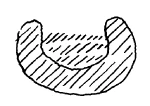
[ 9 ] Auf dem Saturn war die Wärme die Substanz des physischen Leibes des Menschen. Auf der Sonne wurde der physische Menschenleib verdichtet zu der Dichte der Luft, da lagerte sich in ihm ein der Äther- oder Lebensleib und gestaltete den physischen Leib um; da haben wir einen physischen Menschenleib und in ihn hineingearbeitet einen Ätherleib; dieser Ätherleib ist eingliedrig, der physische Leib ist zweigliedrig auf der Sonne. Wir müssen im physischen Leib auf der Sonne einen vollkommeneren und einen unvollkommeneren Teil unterscheiden, einen solchen, der vom Ätherleib noch nicht durchdrungen ist. Bei diesem Bilde des physischen Leibes auf der Sonne müssen wir uns denken: das Innere hat nichts abbekommen vom Ätherleib; das ist von demselben Wert, wie der physische Leib schon auf dem Saturn war. So daß wir einen Teil schon auf der Pflanzenstufe haben, der durchsetzt ist von einem anderen Teil, der noch auf der Mineralstufe steht; aber die beiden durchdringen sich vollständig (siehe Zeichnung 1).
[ 9 ] On Saturn, warmth was the substance of man's physical body. On the Sun, the physical body of man was condensed to air; then an etheric, or life-body, entered into it, transforming this physical body. We now have on the sun a physical human body, with an integrated etheric body consisting of one member. The physical body consists of two members. In the case of the physical body on the Sun, we must distinguish a more perfect and a less perfect part—that is to say, one part was not as yet permeated by the etheric body. When picturing to ourselves this physical body on the Sun, we must realize that the inner part of this physical body has received nothing from the etheric body; it has still the same value as the physical body had on Saturn. Thus, we have one part which has already attained to the stage of a plant, and this part is at the same time permeated by another part, which is still at the stage of a mineral: yet these two parts completely permeate one another.

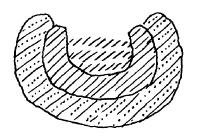
[ 10 ] Wir gehen nun über zum physischen Körper auf dem Monde. Hier war er schon bis zum Wasser verdichtet. Hineingegliedert ist der Äther- und der astralische Leib. Dreierlei verschiedene Teile sind hier zu unterscheiden. Einer ist vom Äther- und Astralleib durchdrungen, einer nur vom Ätherleib, und einer ist mineralisch geblieben (siehe Zeichnung 2).
[ 10 ] Let us now consider the physical body on the Moon. Here, it is already condensed to water. The etheric body and the astral body are incorporated in it. Thus, we must now distinguish three different parts: One part is permeated by the etheric and astral bodies; another part is permeated only by the etheric body; and a third part has remained at the mineral stage.

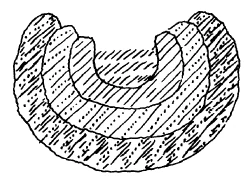
[ 11 ] Jetzt betrachten wir den physischen Leib auf der Erde. Da kommt das Ich dazu. Auf der Erde sind vier ineinandergearbeitete Glieder. Der erste Teil ist durchzogen vom Ätherleib, Astralleib und Ich, der zweite Teil vom Äther- und Astralleib, der dritte Teil nur vom Ätherleib, und ein viertes Glied ist noch auf der mineralischen Stufe. Es hat den Wert eines Minerals, steht heute noch auf der Saturnstufe. Diese vier Glieder sind genau zu unterscheiden am physischen Leibe. Das erste Glied, in das alle vier Glieder hineingearbeitet sind, das sind die roten Blutkörperchen. Überall da, wo wir rotes Blut haben, da sind die vier Glieder hineingearbeitet (siehe Zeichnung 3).
[ 11 ] And now, let us consider the physical body on the Earth. Here, the Ego is added. On the Earth, four members are interwoven. One part of the physical body is permeated by the etheric body, astral body and the Ego; a second part, by the etheric body and astral body; a third part, by the etheric body only; and a fourth part remains at the mineral stage. It has the same value as a mineral, and is still at the stage of Saturn. These four parts can be clearly distinguished in the physical body. The first part, which contains all four members, consists of the red blood corpuscles. Wherever we find red blood, these four members permeate one another.

[ 12 ] Die Nerven sind das zweite Glied. Überall, wo Nerven sind, da sind physischer Leib, Äther- und Astralleib hineingearbeitet. Überall, wo Drüsen sind, da sind physischer Leib und Ätherleib hineingearbeitet. Alle Sinneswerkzeuge, alle physikalischen Apparate am Menschen haben nur die Stufe eines Minerals erreicht. Sie folgen ganz denselben Gesetzen wie die Mineralien. Auge und Ohr gehören zu den mineralischen Einschlüssen; auch im Gehirn sind noch solche Teile. Sie sehen, wie verführerisch es so manchmal ist, Materialist zu werden, weil etwas, was mineralisch ist, den ganzen Körper durchzieht. Wenn der Materialist sagt, das Gehirn sei mineralisch, so hat er zum Teil recht, wenn er nur den einen Teil betrachtet. Besonders sind es ganz bestimmte Partien im Vorderhirn, die zwar durchzogen sind von anderen Einstrahlungen, in denen aber nur mineralische Kräfte tätig sind. Würden wir Knochen und Muskeln betrachten, so würde es noch komplizierter werden.
[ 12 ] The nerves are the second member. Wherever nerves are found, there the physical, etheric and astral bodies permeate one another. Where glands are to be found, the physical and etheric bodies interpenetrate. All the instruments of the senses, all organs which have the character of a physical apparatus, have reached merely the mineral stage. They follow exactly the same laws as do the minerals. The eye and the ear, for instance, belong to these mineral inclusions; also in the brain, such mineral parts still exist. Thus you can see for yourselves how easily one may be tempted at times to become a materialist—because something that is mineral permeates the whole body. If a materialist declares that the brain is mineral, he is in part right—that is, if he considers merely one part of the brain. Particularly in certain parts of the frontal brain—which are, however, also permeated by other irradiations, solely mineral forces are active. And were we to study the bones and muscles, it would become still more complex.
[ 13 ] Als das Ich in den Menschen eingezogen war, da hat es angefangen, Empfindungsseele, Verstandesseele und Bewußtseinsseele auszuarbeiten, und da arbeitete es die Knochen und Muskeln aus. Man braucht Jahre allein dazu, um diese Dinge nur recht auseinanderzuhalten, will man diese Dinge genau betrachten. Man muß geduldig Stück für Stück verfolgen.
[ 13 ] When the human Ego entered into man, it began to devise the sentient soul, the rational soul, and the consciousness soul; and at the same time, it worked out the bones and muscles. If we wish to observe these things exactly, we need years of study, only to be able to keep them distinct and separate. We must trace one thing after the other, with patience.
[ 14 ] Wenn wir nun einen schlafenden Menschen vor uns haben, so liegen im Bette physischer Leib und Ätherleib. Aber dieser physische Leib ist sehr kompliziert. An ihm arbeiten im wachen Zustande astralischer Leib und Ich im Blute. Wenn nun der physische Leib im Bette liegt und der Mensch schläft, was ist dann geschehen? — Es wird wohl noch das versorgt, was der Ätherleib versorgen kann; aber an der Erhaltung des Blutes müßten Astralleib und Ich mitwirken, so daß für das Blut jede Nacht der Tod eintreten würde, denn es ist auf Ich und Astralleib angewiesen; aber diese verlassen den Körper treulos. Auch das ganze Nervensystem wird schnöde verlassen, für das der astralische Leib auch mitwirken müßte. Wir haben also die merkwürdige Tatsache vor uns, daß eigentlich in jeder Nacht Blut und Nervensystem absterben müßten; sie wären dem Tode ausgeliefert, wenn es auf den Menschen ankäme. Da müssen andere Wesen eintreten, da müssen andere Wesenheiten die Arbeit des Menschen übernehmen. Hereinwirken aus anderen Welten müssen andere Wesenheiten, damit sie ihm das ordentlich erhalten, was er schnöde verläßt. Was das für Wesenheiten sind, die hereinwirken, die dem Menschen die Möglichkeit geben, daß sein Blut erhalten bleibt, wollen wir versuchen, uns zu erklären.
[ 14 ] If we now have before us a sleeping human being, his physical body and etheric body lie on the bed. But this physical body is very complicated. When the human being is awake, the astral body and the Ego work within his blood. But what happens when the physical body lies on the bed and the human being is asleep? The functions of the etheric body are indeed still carried on—yet the astral body and the Ego have to cooperatively work on the preservation of the blood. Hence, every night, the blood would be doomed to death, since it is dependent upon the Ego and the astral body, but these leave the body unfaithfully. Also the whole nervous system is abandoned disdainfully, on which the astral body must collaboratively work. Thus, we have before us the strange fact that in reality, the blood and the nervous system would have to die every night—they would fall a prey to death, if they would depend entirely upon the human being. Other Beings must come to their aid; other Beings must take over the work of man. From other worlds, other Beings must pour their activity into man, in order to preserve what he so disdainfully abandons. We shall now try to explain the nature of these Beings who become active when man is asleep, and to make it possible for him to preserve his blood intact.
[ 15 ] Wir können uns auf folgende Weise eine Vorstellung machen von diesen Wesenheiten. Wir fragen uns einmal: Wo lebt denn eigentlich des Menschen Ich, wenn es hier auf dem physischen Plane lebt? In welchem der drei Reiche? - Da müssen Sie sich fragen: Was können wir eigentlich erkennen, ohne hellseherisch wahrzunehmen? -— Wir können nur das Mineralreich erkennen. Das ist das Eigenartige im Menschen, daß der Mensch nicht einmal die Pflanze ganz begreift, solange er nicht astralisch hellsehend ist. Dadurch, daß der Mensch jetzt nur das Mineralische an der Pflanze erkennt, behaupten die Materialisten, daß die Pflanze nur ein Konglomerat von mineralischen Vorgängen ist. Wenn der Mensch einmal so weit an sich gearbeitet haben wird, daß er auf der ersten Stufe des Hellsehens ist, dann wird ihm das Leben der Pflanzen, werden ihm die Gesetze des Lebens geradeso klar sein, wie es uns Jetzt die Gesetze der mineralischen Welt sind.
[ 15 ] We can form an idea of these Beings, if we ask ourselves: where does the human Ego really live, when it lives here, upon the physical plane? In which one of the three kingdoms does it live? And we must ask ourselves further: how much can we really know, without clairvoyant perception?—We can gain knowledge only of the mineral kingdom. This is the peculiar characteristic of the human being—that he cannot even grasp the plant completely, as long as he is not astrally clairvoyant. Materialists declare that plants are merely a conglomerate of mineral processes—just because they can see only the plant's mineral nature. When the human beings will have progressed, in their work upon themselves, as far as the first stage of clairvoyance, the life of the plants and the laws of life will then appear to them just as clearly as do now the laws of the mineral world.
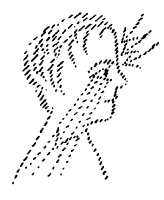
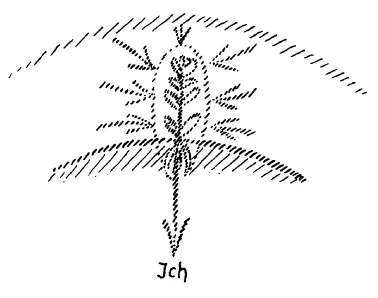
[ 16 ] Setzen Sie eine Maschine zusammen, bauen Sie ein Haus, so sind diese nach den Gesetzen der mineralischen Welt gebaut. Eine Maschine ist nach den Gesetzen der mineralischen Welt gebaut, eine Pflanze aber können wir nicht so bauen. Wenn Sie eine Pflanze haben wollen, müssen Sie diese Arbeit den Wesenheiten überlassen, die der Natur zugrunde liegen. Später wird man Pflanzen im Laboratorium herstellen können, aber erst dann, wenn das für den Menschen ein Sakrament, eine heilige Handlung sein wird. Alle Darstellung des Lebendigen wird dem Menschen erst dann erlaubt sein, wenn er so ernst und geläutert sein wird, daß ihm der Laboratoriumstisch zum Altar wird. Vorher wird nicht das Geringste davon verraten werden, wie die lebendigen Wesen zusammengefügt sind. Mit. anderen Worten: Das Ich als erkennendes lebt im Mineralreich und wird aufsteigen zum Pflanzenreich und wird dieses dann ebenso begreifen lernen wie heute das Mineralreich. Später wird es auch die Gesetzmäßigkeit des Tierreiches und dann die des Menschenreiches begreifen lernen. Alle Menschen werden lernen, das Innere der Pflanze, des Tieres und des Menschen zu begreifen; das sind Zukunftsperspektiven. Was man wirklich begreift, das kann man auch darstellen, zum Beispiel eine Uhr. Der heutige Mensch wird niemals etwas aus der lebendigen Natur darstellen können ohne Hilte der Wesenheiten, die hinter der Natur stehen, solange es nicht eine sakramentale Handlung für ihn sein wird. Dann erst wird er aufsteigen vom Mineralreich zum Reiche des Pflanzlichen. Der Mensch ist heute Mensch, aber er erkennt nur im Mineralreich. Des Menschen Ich lebt in menschlicher Gestalt, aber wenn des Menschen Ich in die Umwelt schaut, so erkennt es nur im Mineralreich. Dieses Ich bringt also nur die Fähigkeit zunächst auf, das Blut mineralisch zu durchleben, denn mehr kann es nicht. Wenn auch bei Tage das Ich im Blute lebt, es bewohnt und durchlebt, so tut es das nur mineralisch. Wie tut es das? - Wenn Sie hinausschauen in die Welt, da eröffnet Ihnen Ihre Erkenntnis die Gesetze des mineralischen Reiches. Beachten Sie diese eigentümliche Art der menschlichen Tätigkeit. Sie schauen hinaus mit Ihren Sinnen und Sie nehmen die Gesetze des Mineralischen auf und prägen diese Gesetze dem Blute ein während des Wachens, Sie drängen sie in das ganze Blut hinein, Sie beleben das Blut mineralisch. Das ist der eigentümliche Gang dessen, was geschieht bei der Erkenntnis. Stellen Sie sich den Menschen schematisch vor (siehe Zeichnung), so strömen von allen Seiten die Gesetzmäßigkeiten der mineralischen Welt auf ihn ein. Sie bleiben aber nicht stehen bei den Sinnesorganen, sondern rinnen mit dem Blute durch den ganzen Körper des Menschen im wachen Zustande.
[ 16 ] If you construct a machine, or build a house, you do this in accordance with the laws of the mineral world. A machine is build according to these laws of the mineral world; but you cannot construct a plant in this way. If you wish to have a plant, you must leave this work to those Beings which form the foundations of Nature. In the future, it will be possible to produce plants in the laboratory, but only when human beings will regard this as a sacrament, as a holy rite. Only when man has become so earnest and purified, that he looks upon the laboratory-table as an altar, will he be permitted to produce living substance. Until this time has arrived, however, not even the slightest detail concerning the way in which living beings are constituted, will be revealed to him. In other words: The Ego lives, as a cognitive being, in the mineral kingdom, but it will ascend, in the future, to the plant kingdom, and it will learn to know this kingdom, just as today, it knows the mineral kingdom. Still later, it will learn to grasp also the laws of the animal kingdom; and finally, those of the human kingdom. All human beings will learn to know and to grasp the inner nature of plants, animals, and of man—these are prospects for the future. Whatever we really understand, we can also produce—for instance, a clock. But the human being of our day will never be able to produce anything belonging to the sphere of living Nature, without the help of the Beings that lie behind nature, as long as such a work has not become for him a sacramental rite. Only then will he be able to ascend from the mineral kingdom to the plant kingdom. The human being is already a human being, at the present time; but his knowledge is restricted to the mineral kingdom. The Ego of man lives within a human form, but when this human Ego looks out into the environment, its cognition is limited to the mineral kingdom. The Ego thus possesses only the capacity to vitalize the blood in a mineral fashion—it is unable to do more. Although the Ego lives within the blood, during the day—dwelling within it and vitalizing it—nevertheless it does this merely in a mineral way. How does it do this? If you look out into the world, your cognition will reveal to you the laws of the mineral kingdom. Try to observe for yourself the peculiar quality of this human activity. You look out into the world through your senses; you grasp the mineral laws, and during your waking hours, you impress these laws upon your blood—you force them into the entire substance of your blood, thus vitalizing it in a mineral way. This is the peculiar process which takes place during the act of cognition. Now imagine the human being in accordance with the following schematic drawing as shown below. The regularities of the mineral world stream into him from all sides. However, they do not remain only in his sense-organs; but stream, while the human being is awake, together with the blood through the whole human body.

[ 17 ] Was tut die pflanzliche Welt? - Wie es mit der Pflanze ist, darauf kommen Sie, wenn Sie sich folgendes genau überlegen. Es ist Ihnen immer gesagt worden, daß das Ich an den anderen Leibern arbeitet und den Astralleib umgestaltet zum Geistselbst. In demselben Maße, wie das geschieht, fließen die Gesetze des Pflanzenreichs in das Nervensystem des Menschen ein. Wenn der Mensch die nächste Stufe des Hellsehens erreicht, so fließen die Gesetze des Tierreichs in sein Drüsensystem ein, und wenn der Mensch umgestaltend am physischen Leibe arbeitet, so fließen die Gesetze des Menschenreichs selbst in den menschlichen Leib ein. Das ist alles für den Wachzustand gedacht und für die Zustände des höheren hellseherischen Bewußtseins. Der Mensch ist also jetzt auf der Stufe angelangt, wo das Ich die Gesetze des Mineralreichs einströmen läßt in das Blut. Das kann das Ich nur im Wachzustande, dann nur kommen die mineralischen Gesetze in das Blut. Wenn der Mensch schläft, muß auch das Blut versorgt werden. Und weil an diesem Blute gearbeitet worden ist durch vier Stufen hindurch, so müssen drei andere Gewalten eintreten. Zunächst eine Gewalt, die am nächsten verwandt ist der Art und Weise, wie das Ich hineinarbeitet in das Blut; diese Gewalt ist eine, die nicht bis zum physischen Plan herabgestiegen ist. Das Blut würde absterben, wenn nicht ein anderes Ich daran arbeitete, während der Mensch schläft. Ein anderes Ich, das oben auf dem Astralplan geblieben ist, das greift ein und übernimmt einstweilen die Arbeit an dem Blute. Wenn wir das menschliche Blut, diesen «besonderen Saft» betrachten, so wirkt während des Wachens ein das Ich des Menschen auf dem physischen Plan, in der Nacht wirkt auf das Blut ein Ich, das auf dem Astralplan ist. Es gibt solche Iche.
[ 17 ] Now, what does the plant-world do? You will understand what takes place in the case of a plant, if you bear in mind the following: You have always been told that the Ego works upon the man's other bodies and transforms the astral body into the Spirit-Self. To the same degree that this takes place, do the laws of the plant kingdom stream into the human nervous system. When the human being has reached the next stage of clairvoyance, the laws of the animal kingdom will permeate his glandular system, and when he works upon the transformation of his physical body, the laws of the human kingdom itself will flow into the human body. All this should be thought of as applying to the waking state and to the various stages of a higher clairvoyant consciousness. Thus we can say that the human being has reached, at the present time, a stage where the Ego permits the laws of the mineral kingdom to stream into the blood. But it is able to do this only during the waking state because the mineral laws can enter the blood only while man is awake. While he is asleep however, the blood must also be cared for. And because this blood has been worked upon, throughout four successive stages (of evolution), three other powers must now step in with their activity. The first of these is a power which is the most closely related to the way in which the Ego works upon the blood—but it is a power which has not descended as far as the physical plane. The blood would be given over to death, did not another Ego work upon it, while the human being is asleep. Another Ego which has remained on the astral plane, and now intervenes by taking over the work upon the blood. If we observe the human blood, this “special juice”,3This relates to a statement by Mephisto in Goethe’s Faust, Part 1, in the Study-room - “Blood is a very special Juice”. we find that while the human being is awake, the Ego of man is active within it, here on the physical plane. During the night however, the blood is worked upon by an Ego which dwells upon the astral plane. For there are such Egos.
[ 18 ] Nun habe ich Ihnen vorher angeführt Iche auf dem astralischen Plan, die Gruppen-Iche der Tiere; jetzt haben wir eine andere Gattung von Ichen, die auf dem astralischen Plane leben und hereinwirken auf den Menschen und das Blut beleben, während das menschliche Ich es verlassen hat. Womit? Was bringen sie in das Blut hinein? - Das, was seit dem Saturn im Menschenleibe sein muß: Feuer, Wärme. Das sind Geister, die nie bis zum physischen Plan heruntergestiegen sind, geistige Wesenheiten, die auf dem Astralplan leben und einen Leib von Feuer haben. Im mineralischen Reich erscheint uns jedes Ding in einem gewissen Wärmezustand. So treffen Sie die Wärme in Ihrer Umgebung als Eigenschaft von festen, flüssigen und luftförmigen Körpern. Denken Sie sich die Wärme einmal abgesondert — das gibt es auf dem physischen Plane nicht. Aber auf dem Astralplan würden Sie solche hin- und herflutende Wärme, solches Feuer finden, das als selbständiges Wesen hin- und herzieht, und darin Wesenheiten verkörpert, so wie wir selbst waren auf dem Saturn. Diese ziehen in der Nacht in das Blut ein und beleben es mit ihrer Wärme. Aber auch noch etwas anderes muß stattfinden, denn das Blut ist auch verlassen vom astralischen Leib, und auch dieser ist zu seiner Bildung notwendig. Es genügt also nicht, daß diese Ich-Wesen sich heranmachen in der Nacht und mit ihrem Wärmeleib am Menschen arbeiten, sondern es müssen noch solche Wesenheiten hinzukommen, die das Blut so bearbeiten können, wie es der Astralleib tut. Diese Wesenheiten haben ihr Ich auf dem Devachanplane; dieses Ich hat einen viel höheren Leib, der sich nicht einmal bis zur Wärme verdichtet hat. Das Ich, das ich zuerst beschrieben habe, ist niemals bis zur physischen Welt heruntergestiegen; es ist auf dem Astralplan geblieben. Das zweite Ich ist noch weniger tief heruntergestiegen; es hat nie den Astralplan betreten und ist auf dem Devachanplane geblieben. Es durchdringt das Blut und bewirkt in ihm dasselbe, was der menschliche Astralleib bei Tage tut.
[ 18 ] Now I have earlier referred to Egos living on the astral plane—namely, to the group-souls of the animals. But in this case we are dealing with another species of Egos, dwelling upon the astral plane, which work upon the human being and vitalize his blood, when the Ego of man has abandoned it. By what means do they accomplish this? And what is it that they bring into the blood? They bring into it that which, ever since the time of Saturn, must always be present in the human body—namely fire, warmth. These are spirits which have never descended as far as the physical plane—spiritual Beings that live on the astral plane and have a body of fire. In the mineral kingdom, everything appears to us endowed with a certain degree of warmth. Warmth is met as a quality of solid, liquid, and gaseous bodies. Now try for a moment to think of warmth as something completely separate, which does not exist as such on the physical plane. But on the astral plane, you would find such a warmth, such a fire, flowing there and thither—such a fire which moves back and forth as a self-contained being—and within it, you would find embodied Beings such as we ourselves were on ancient Saturn. These Beings enter into the blood during the night, and vitalize it with their warmth. But something else must also take place—for the astral body also abandoned the blood, and this body too, is indispensable to it. Thus it is not sufficient if these Ego-beings alone approach man during the night and work upon him with their warmth-bodies—but other beings as well are needed, who can process the blood in the same way as the astral body does. These Beings have their Ego upon the Devachan plane, and this Ego possesses a still higher body, which is not even condensed as far as warmth. The Ego which I described first, did never descend even as far as the physical world, it remained on the astral plane. The second Ego descended even less, it has never entered the astral plane—it has remained in Devachan. It permeates the blood and brings about in it the same that the human astral body does during the day.
[ 19 ] So sehen Sie also, wie wir in der Tat in der Nacht behütet und beschützt werden von höheren Wesenheiten, die nicht im Mineralreich leben. Das Ich des Menschen stieg bis zum Mineralreich herunter und wird dann aufsteigen bis zum Pflanzenreich und so weiter. Diese anderen Iche sind stufenweise zurückgeblieben hinter dem Menschenreich: sie bilden die verborgenen Reiche, die Elementarreiche, die hinter unserer physischen Welt liegen und die hereinwirken in unsere physische Welt. Das erste Wesen, welches nachts im Blute wirkt, hat einen Wärmeleib, gerade wie Sie einen physischen Leib haben; es durchdringt das Blut mit Wärme und lebt indes auf dem Astralplan im Wärmeleib, und durch diesen Wärmeleib gehört es dem dritten Elementarreich an. Diese Wesen des dritten Elementarreichs sind die Genossen der Gruppenseelen der Tiere; zu derselben Region gehören sie. Und diese Iche, was können sie denn eigentlich? — Sie brauchen das nicht zu können, was des Menschen Ich kann, das heruntergestiegen ist bis in die physisch-sinnliche Welt; aber sie können das Menschen-Ich ersetzen vom Astralplan aus. Diese Iche wirken vom Astralplan herein wie die tierischen Gruppen-Iche auf die Tiere, daher gewahren wir sie als ähnliche Wesen wie die tierischen Gruppen-Iche, das heißt, sie beleben den Astralleib des Menschen mit Trieben, Begierden und Leidenschaften. Wenn wir nun einen Astralleib vor uns haben, was lebt in diesem Astralleib? — Es leben darin außer dem Ich noch Wesenheiten, die ihr Ich haben auf dem Astralplan. Sie durchsetzen den astralischen Leib wie die Maden den Käse. Das ist das dritte Elementarreich; dieses Reich gestaltet die Triebe und Leidenschaften, die tierisch sind.
[ 19 ] Thus you may see how we are cared for and protected during the night by higher Beings which do not live in the mineral kingdom. The human Ego has descended as far as the mineral kingdom, and will later ascend to the plant kingdom, etc. These other Egos have remained behind the human kingdom during the successive stages of evolution; they form the hidden kingdoms, the Elemental Kingdoms, which lie behind our physical world, and which work down into it. The first Being which works in our blood during the night, has a warmth body—just as we have a physical body; it permeates the blood with warmth—and at the same time, lives upon the astral plane in its warmth body. Through this warmth-body, it belongs to the third Elemental Kingdom. These Beings, belonging to the third Elemental Kingdom, are the companions of the group-egos of the animals—they belong to the same region. And what are the capacities of these Egos? They need not have the same capacities as a human Ego, which has descended as far as the physical sense-world; but they are able nevertheless, to act as a substitute for the human Ego, from the astral plane. These Egos work down from the astral plane, in the same way that the animal group-Egos work down upon the animals. That is why we perceive them to be similar to animal group egos. This means they enliven man's astral body with impulses, desires, and passions. If we have before us an astral body—what lives within this astral body? In addition to the Ego, Beings live within it whose Ego dwells upon the astral plane. These Beings permeate the astral body just as maggots live in cheese. This is the third Elemental Kingdom: it is the kingdom which forms impulses and passions of an animal nature.
[ 20 ] Dahinter liegt ein anderes Reich: das zweite Elementarreich. Es wirkt und formt in einem reineren Element, es formt und gliedert die Gestalten der Pflanzen; es wirkt auch auf den Menschen auf seine vielen pflanzlichen Elemente: Nägel, Haare und so weiter. Diese sind nicht vom Astralleib durchdrungen, sondern nur vom Ätherleib, daher sind sie nicht schmerzempfindlich. Die Haare und Nägel sind solche Produkte, von denen sich der Astralleib schon wieder zurückgezogen hat, man kann sie schneiden, ohne Schmerz zu verursachen; früher war der Astralleib darin. Vieles im Menschen ist pflanzlicher Natur, und in all dieses Pflanzliche wirken die Wesen des zweiten Elementarreichs hinein. So daß das, was an der Pflanze den Leib aufbaut, Kräfte des zweiten Elementarreichs sind. In den Pflanzen wirken zusammen das Pflanzen-Ich, das den Äther- und Astralleib durchzieht, und diese Wesen des zweiten Elementarreichs. Das Pflanzen-Ich auf dem Devachanplan ist ein Genosse der Wesenheiten des zweiten Elementarreichs. Und während das Pflanzen-Ich von innen auf die Pflanze wirkt, wirken diese Wesenheiten von außen, formen sie, bringen sie zum Erschließen, zum Aufblühen. Die ganze Pflanze ist durchzogen vom Ätherleib. Einen eigenen Astralleib hat die Pflanze aber nicht, sondern der ganze Astralleib des Erdplaneten ist der gemeinsame Astralleib der Pflanzen. Das Ich der Pflanzen ist im Mittelpunkt der Erde für alle Pflanzen. Alle Gruppen-Iche der Pflanzen sind zentralisiert im Mittelpunkt der Erde. Daher ist es auch so, daß, wenn Sie die Pflanze ausreißen, Sie der Erde wehe tun; aber wenn Sie eine Blume abpflücken, so ist das ein solches Wohlgefühl für die Erde, wie es für die Kuh ist, wenn das Kalb die Milch saugt. Ein wunderbarer Eindruck ist es auch, wenn man die Saaten und das Getreide im Herbst mäht, wie dann große Ströme von Wohlgefühl über die Erde hinziehen! Die Wesenheiten, welche aus dem zweiten Elementarreich wirken und die Pflanzen in die Gestalt schießen lassen, fliegen von allen Seiten auf die Pflanze ein wie Schmetterlinge. Sie arbeiten an der Wiederholung der Blätter, Blüten und so weiter. Das ist das, was aus dem zweiten Elementarreich einwirkt.
[ 20 ] But behind this kingdom lies another, namely the second Elemental Kingdom. This kingdom is active within a purer element, where it moulds and forms the shapes of the plants. But its activity extends also to the human being—to his many elements which have a plant-like character—nails, hair, etc. These are not permeated by the astral body, but merely by the etheric body; for this reason they feel no pain. The hair and nails are products from which the astral body has already withdrawn—it is possible to cut them, without causing pain. At an earlier time however, the astral body was also within these. Many things in the human being are of a plant-like nature, and within all these plants-like elements, the Beings of the second Elemental Kingdom are active. Hence, that which builds up the body of a plant consists of the forces belonging to the second Elemental Kingdom. Within the plant, the Plant-Ego, which permeates the etheric and astral bodies, and those Beings of the second Elemental Kingdom work together. The plant-Ego on the Devachan plane is a companion of the beings of the second Elemental realm. Whereas the Ego of the plants works upon the plant from within, these other Beings work upon it from without—forming it, making it grow and blossom. The whole plant is permeated by its etheric body. But it does not possess an astral body of its own; instead the entire astral body of the Earth planet forms the common astral body of the plants. The Ego of the plants is to be found at the centre of the Earth. All plant group-egos are centralised in the centre of the Earth. For this reason, if you pull up a plant by the roots you cause pain to the Earth; but, if you pick a flower, the Earth will have a feeling of well-being, as a cow has a feeling of well-being when her calf sucks her milk. It is also a wonderful experience when the seeds and grain is mowed in autumn, to see how great waves of well-being stream over the Earth! The Beings which work upon the plants, from out of the second Elemental Kingdom, and help them to take shape, fly toward the plant from all sides, like butterflies. The renewal and repetition of the leaves, blossoms, etc., is their work. This is what acts upon the plants from out of the second Elemental Kingdom.

[ 21 ] Es gibt ebenso ein erstes Elementarreich, und das gibt den Mineralien die Gestalt. Die Tiere haben ihre Triebgestalt von den Wesenheiten des dritten Elementarreiches. Die Blätter und so weiter der Pflanzen werden von dem zweiten Elementarreich gestaltet; es arbeitet hauptsächlich in Wiederholungen. Die Gestaltungskräfte der Mineralien, die aus dem Gestaltlosen herauswirken, die sind im höheren Devachan zu finden. Diese drei Elementarreiche durchdringen sich, strömen ineinander. Wer sich alles getrennt vorstellt, kann nie zu realen Vorstellungen kommen. Im Pflanzenreich haben Sie Pflanzenreich und Mineralreich, im Tierreich haben Sie Tierreich, Pflanzenreich und Mineralreich ineinandergeschoben. Beim Menschen kommt noch das Ich hinzu. Mit dem Einziehen des Ich ist erst auf der Erde das Menschenreich entstanden. Das Ich macht erst den Menschen zum Menschen; es findet seinen Ausdruck im Blute. Das Ich kann aber erst das Mineralreich erkennend durchdringen; es muß die anderen Reiche den Wesen der Elementarreiche überlassen. Im Mineralreich steckt außer dem Mineralreich auch noch das erste Elementarreich, daher haben wir ein gestaltetes Mineralreich. Die Pflanze ist nur eine gestaltete Pflanze durch das zweite Elementarreich, sonst wäre sie kugelförmig. Das Tier ist mit Trieben und so weiter ausgestattet, weil außerdem noch das dritte Elementarreich hinzukommt. Unsere Welt ist etwas, was ineinandergeschoben ist; nur wenn wir unsere Begriffe flüssig machen, kommen wir allmählich dahin, die Sache zu begreifen.
[ 21 ] In like manner, there is a first Elemental Kingdom, which gives the minerals their form. The animals received their form determined by instincts and desires from the Beings of the third Elemental Kingdom. The leaves, etc., of the plants are formed by the second Elemental Kingdom; this work consists chiefly of repetitions. But the formative forces of the minerals, which work out of the formless element, are to be found in the higher Devachan. These three Elemental Kingdoms permeate one another, flow into one another. One who imagines everything distinct and separate, will never attain to a living understanding. In the plant kingdom, the plant and mineral kingdoms permeate one another. In the animal kingdom, the animal, plant and mineral kingdoms interpenetrate. And in a human being, the Ego is added to these. For, with the emergence of the Ego, the human kingdom first arose on the Earth. It is the Ego which first makes man a human being; it finds its expression in the blood. But the Ego can for the present, penetrate with its cognitive forces only into the mineral kingdom; it must leave the other kingdoms to the Beings of the Elemental Kingdoms. The mineral kingdom contains, besides this mineral kingdom itself, also the first Elemental Kingdom; for this reason, it takes on a clearly defined shape. The plant owes its form entirely to the second Elemental Kingdom—for, without it, it would be spherical. And the animal is endowed with instincts, etc., owing to the added activity of the third Elemental Kingdom. Our world consists of interpenetrating regions; only if we are able to make our concepts mobile and fluent, shall we gradually be able to understand such things.
[ 22 ] Wenn wir uns vorstellen wollen, wie sich das verhält mit dem dritten Elementarreich im Tierreich, so können wir es uns an einem Beispiel klarmachen. Sie alle kennen den Vogelflug. Die Vögel haben ganz bestimmte Bahnen für ihre Züge, von Nordosten nach Südwesten, von Südwesten nach Nordosten. Diese Züge, von wem werden sie dirigiert? - Von den Gruppenseelen der Vögel. In diesen Zügen kommt der Trieb zum Ausdruck für die regelmäßigen Wanderungen über die Erde hin; da dirigieren die Gattungs- oder Gruppenseelen der Tiere. Dagegen geben dem Tiere die Gestalt, so daß es diesen Trieb haben kann, so daß es einen Träger für den Trieb hat, die Wesenheiten des dritten Elementarreichs, die Genossen der tierischen Gruppenseelen. Trivial würde man sagen: Diejenigen Iche, die die Gruppenseelen der Tiere sind, sind eine Gesellschaft auf dem Astralplan; eine andere Gesellschaft sind die Wesenheiten des dritten Elementarreichs. Aber sie müssen in holder Eintracht zusammenwirken, die einen geben die Triebe, die anderen dafür die Körper, formen und gestalten sie, damit der Trieb sich ausleben kann.
[ 22 ] If we wish to form a concept of how the third Elemental Kingdom is connected with the animal kingdom, the following example may be helpful. You all know the migrations of the birds. The birds take quite definite routes in their migrations; from Northeast to Southwest and from Southwest to Northeast. But who directs these migrations? It is the group-souls of the birds. In these flights the urge for regular migrations over the Earth comes to expression. They are directed by the Souls of the Species, or Group-Souls, of the animal kingdom. On the other hand, the animals are given their form, which enables them to have certain instincts and so that it has a bearer for these instincts, by the Beings of the third Elemental Kingdom—the companions of the animal group-souls. If we wish to express this in a somewhat trivial manner, we may say: Those Egos which constitute the animal group-souls form one community on the astral plane; and the Beings of the third Elemental Kingdom form another. Nevertheless, they must work together in fair harmony—the one supplies the instincts, the other the bodies, forming and moulding them, so that the instincts can realise themselves.
[ 23 ] Die physischen Gestalten der Pflanzen rühren her von den Wesen des zweiten Elementarreichs. Alles, was in den Mineralien gestaltet, das sind die Wesen des ersten Elementarreichs. Die Kräfte der Mineralien, was als Abstoßung und Anziehung wirkt, die atomistischen Kräfte, rühren her von den Gruppen-Ichen der Mineralien. Was die Mineralien gestaltet, das sind die Wesen des ersten Elementarreichs.
[ 23 ] The physical forms of the plants originate from the Beings of the second Elemental Kingdom. And in everything which moulds and works upon the minerals, the Beings of the first Elemental Kingdom are to be found. The forces of the minerals, active as attraction and repulsion, the atomistic forces, proceed from the group-egos of the minerals. It is the Beings of the first Elemental Kingdom who form the minerals.
[ 24 ] Hier wird eine Perspektive eröffnet, wo man zu suchen hat die Wirkungen der Reiche in unserer Welt. Man muß sich aber sehr genau einlassen auf diese Dinge. So kann man zur Pflanze sagen: Du bist ein lebendes Wesen; das verdankst du dem Pflanzen-Ich. Aber die Gestalt geben dir die Wesen des zweiten Elementarreichs.
[ 24 ] Thus we obtain a perspective which reveals to us where we may seek for the effects of the various kingdoms in our world. We must however, observe these things very accurately. We may say to a plant: You are a living being; this you owe to the plant-ego. Your form, your shape however, is given to you by the Beings of the second Elemental Kingdom.
[ 25 ] Damit schließen sich nun die verschiedenen Reiche zusammen. Es sind deren sieben. Das erste Elementarreich ist dasjenige, das den Mineralien die Form gibt, zum Beispiel den Kristallen. Das zweite Elementarreich wirkt in der Gestaltung der Pflanzengestalten. Das dritte Elementarreich belebt das Blut im Schlafe und gestaltet zugleich das Triebleben der Tiere. Das Mineralreich ist dasjenige, wo ein Ich im Mineralreich hineinarbeiten kann, das Pflanzenreich ein solches, wo ein Ich eine Pflanzenwelt hineinformen kann, das Tierreich dasjenige, wo ein Ich eine Tierwelt hineinformen kann, das Menschenreich dasjenige, wo ein Ich eine Menschenwelt hineinformen kann. Daraus sieht man, daß Geduld gehört zur Durchdringung der Geisteswissenschaft. Die Welt ist kompliziert gebaut, die höchsten Wahrheiten sind nicht die einfachsten. Es ist eine maßlos törichte Rederei, zu behaupten, daß man die höchsten Dinge mit den einfachsten Begriffen fassen könne. Es kommt das nur aus der Bequemlichkeit. Man sieht ein, daß man eine Uhr nicht gleich verstehen kann, aber die Welt will man sofort verstehen. Will man das Göttliche erkennen, so braucht man eine endlose Geduld, da das Göttliche alles enthält. Um die Welt zu verstehen, will man die einfachsten Begriffe anwenden. Das ist Bequemlichkeit, so fromm es auch die Seele sagt. Das Göttliche ist tief, und ewige Zeit braucht man, um es zu erkennen. Der Mensch trägt wohl den Funken der Gottheit in sich, aber erst im Sammeln der Weltentatsachen kann man das Wesen der Gottheit erkennen.
[ 25 ] Thus the distinct kingdoms are connected. There are seven of these. The first Elemental Kingdom provides the formative forces for the minerals—for instance for the crystals. The second Elemental Kingdom provides the formative forces that shape the plants. The third Elemental Kingdom cares for the blood during the night and at the same time forms the animals’ instinctive life. The mineral kingdom is the one in which an Ego in the mineral kingdom can be formative. The plant kingdom is such, that an Ego can form a plant world within it. The animal Kingdom is such that an Ego can form an animal world within it. The kingdom of man is the kingdom into which an Ego can shape a human world. From all this we can see that patience is necessary for the penetration of Spiritual Science. The world is constructed in a complicated way, and the highest truths are not the simplest. It is an utterly senseless way of speaking to declare that the highest things can be grasped with the simplest concepts. This is due only to convenience. It is admitted of course, that it is not possible to understand a clock at once, but the world, people want to understand immediately. If we wish to grasp the Divine, infinite patience is needed, for the Divine contains everything. In order to understand the world, people wish to apply the simplest concepts. This is simply convenience, no matter how reverently the soul may say it. The Divine element is profound, and an eternity is needed in order to grasp it. Man carries indeed, the spark of the Godhead within him, but the nature of the Godhead can be understood only by collecting a knowledge of the facts of the world.
[ 26 ] Die große Geduld und Entsagung der Erkenntnis, die müssen wir erst lernen. Zu einem Urteil muß man heranreifen. Es ist die Welt in jedem Punkte selbst unendlich. Und man muß die Bescheidenheit haben, zu sagen, daß alles gewissermaßen nur halb wahr ist. Man muß alles in moralische Impulse verwandeln, auch die Einteilung des Menschen in zehn und zwölf Glieder. Die Geisteswissenschaft gibt Bilder, an die sich die Gefühle anschließen sollen. Die Geisteswissenschaft ist nur dann etwas wert, wenn wir aus ihr nicht nur Erkenntnis schöpfen, sondern mit den edelsten Gefühlen für die Tiefe der Umwelt erfüllt werden. Desto größer wird die Sehnsucht nach dem Göttlichen. Dadurch, daß dem Menschen das Göttliche in ferne Höhen entrückt erscheint, soll er um so mehr dahin wirken, stark zu werden, um es wiederum zu erreichen.
[ 26 ] The great patience and renunciation which knowledge entails, is what we must learn first of all. We ourselves must gradually mature in order to form judgments. The world itself is infinite at every point. And we must be modest enough to say that everything is, in a certain sense, only a half-truth. We must transform everything into moral impulses, even the organisation of man's being into ten or twelve members.4Compare notes to the lecture held in Berlin, 18 March 1904 in No. 29 Contributions to the Collected Works of Rudolf Steiner, Easter 1970. Spiritual Science gives us pictures which we should unite with our feelings. For Spiritual Science is of value only when we draw not only knowledge from it, but are filled with the noblest feelings for the profundity of the world that surrounds us. All the greater then, will be the longing for the Divine. The very fact that the Divine appears to man to be suspended in distant heights, should inspire him so much the more to become strong so that he can reach the Divine again.