

Speech and Drama
GA 282
14 September 1924, Dornach
X. The Mystery Character of Dramatic Art
My dear Friends,
It is my intention today to add something to our previous studies that will, I believe, help you to a deeper understanding of dramatic art. For, as I indicated at the end of yesterday's lecture, that is the direction in which our studies are leading us—to an esoteric deepening of our whole conception of drama and of our own part in it. For the community at large, the situation is of course different; we shall be dealing with that later. But speaking for those of us who want to take a share in the work of the stage, we are called upon to fulfil a mission (if I may use such a word in this connection)—a mission on behalf of art and on behalf also of mankind. And before we can begin to have a true perception of that mission, we must learn to see how deeply our art is grounded in man as he is today, and we must also look a little more closely into the whole process of human evolution, in one phase of which we are now living.
The actor must be able to experience for himself how the word, the artistically formed and spoken word, can reveal the whole being of man. This penetrating insight that can behold the word as a revelation of man cannot fail to give him a more spiritual conception of his calling; and once he has that, he will be able to arouse within him the necessary energy to make his work increasingly artistic, gradually bringing more and more artistic form into every detail of his acting. I will give you an example.
An essential factor in the speaking of consonants is the part played by palate, tongue, lips, etc., in the forming of the word. And by looking a little deeper into the matter, we can see how the word on its part, in order that it shall acquire a fulness of content, catches hold of the experience which is associated with the region of each of the specified organs. We can quite well detect this, if we do not disdain to give our attention first of all to what presents itself to immediate perception, in order to pass on afterwards to its more spiritual aspect.
Suppose we take our start from the ordinary physical sense of taste. There is positive ground, you know, for the fact that appreciation of art goes also by the name of taste; although when today we speak of taste in matters of art, and then again of the taste of a cucumber or of a veal cutlet, we have no longer that feeling of necessity which led men of an older time to label both with the same word.
Consider how it is when you take some food or drink that can be described as bitter, that ‘tastes bitter’ in the ordinary material sense. Your palate and the back part of your tongue do the sensing of the bitterness for you. While the bitter substance is passing from your mouth into your oesophagus, and you are having the purely physical experience of bitterness, it is the palate that is engaged, in conjunction with the back part of the tongue. It is also possible to feel that something you eat tastes sour. The consumption of such a substance will lead you into a different physical experience. The task of mediating for you this perception of sourness you assign to the edge of the tongue. It is the edge of the tongue that is actively engaged in the experience of sourness. Or again, some food may taste sweet; then the tip of the tongue is mainly concerned. As you see, our relationship to the external world is in strict accordance with laws underlying our organism. We could never cajole the tip of the tongue into communicating to us the sensation of sourness or of bitterness; such foods leave it passive and inert. The tip of the tongue enjoys the distinction of coming into operation only when we take something sweet into our mouth.
Now it is, as I have said, not without very good reason that we transfer the expressions sour, bitter, sweet, to the realm of the soul. We apply these terms to impressions that are of a moral nature—and we do so with careful discrimination. For we are not ordinarily inclined to picture, for instance, something sour before us as a result of the words another person speaks in our presence; his countenance however, may well cause us to speak of a sour face, and that out of a perfectly natural instinct. Whilst we do not readily feel a sentence to be sour, we have no compunction about calling a face sour. The fact is, the experience that makes you describe a face as sour calls into action exactly the same region in the mouth—namely the back part of the tongue where it goes toward the throat—as is engaged when you swallow vinegar. The experience is somewhat more spiritual, but it works in the same way. For there is an inner relationship between the two, and the relationship makes itself felt—instinctively, but unmistakably. The unconscious in us knows quite well the connection between vinegar and a sour face. There is just this slight difference in their working, that vinegar lays claim to the small and more passive organs of the tongue, whereas there are occasions when a sour face will call upon the more active parts of the same!
We are here verily becoming able to behold the mysterious transition from inner perception or feeling to speech. For there is undoubtedly this real and living connection between them. When something makes an impression upon us in the moral sense and moves us to speech, then what happens is exactly the same as when some physical substance excites our sensation of taste. If you know this, then the knowledge will, evoke in you the power also to dive down into the more hidden regions of external reality. It will, for example, become possible for you to know that supposing you have to speak a sentence that refers, not without artistic feeling, to So-and-so's sour countenance, you will do well to carry in your soul at the same time a distinct after-taste of vinegar. Careful observation of life teaches that this will help; for there is a road that leads straight across from one experience into the other.
Or, let us suppose, in the course of my part, I have to say, or am to overhear, that someone has a complaint against me. Then it will be good if I can instinctively arouse in the depths of my soul a sensation that resembles the after-taste of wormwood.
Or again, let us say, I have to present on the stage some high official into whose presence a man is admitted who wishes to obtain for himself some office or other. The latter adopts a cringing attitude, and pours out on me words of the most fulsome flattery. This is a situation that may well occur in a play. In addition to all else that it will require—and the ‘all else’ will be substantially helped thereby—I shall do well to carry in me, while speaking, the sweet taste that sugar leaves in the mouth. And that will help with my listening too. If I am there in front of him, feeling in my soul, as it were, the after-taste of sugar, I shall—as the listener—instinctively assume the appropriate gesture.
The question might well be raised: In expressing ourselves in this way, are we not adopting a rather realistic and materialistic point of view? Let me tell you, however, that the inducement to speak in this way follows as a direct result from that other study to which I have already alluded—the study, namely, of the historical evolution that has led up to our present drama.
If we trace drama right back to the place of its birth, we come ultimately to what are known as the Mysteries. It is, in fact, not possible to have a worthy conception of dramatic art unless we are able to see its origin in the art of the Mysteries. Now, the art of the Mysteries had this aim in view: that what took place on the stage should proceed from those impulses that make their way into man from the spiritual world. But the art of the Mysteries sought also to follow how these spiritual impulses work right down into the details of the material world; so that, for example, those who had to take part in the ancient Mystery Plays would actually be given vinegar or wormwood, or some other substance, in order to prepare them for finding the right words and mime and gesture. And we, on our part, only begin to take our art seriously when, in our quest for artistic form, we do not hesitate to take account also of bodily experience. Otherwise our performances, where the acting must needs, from the very nature of the art, be carried right down to the fingertips—I might even say, to the tip of the tongue, for I have seen actors put out their tongue before now !—can never be more than superficial.
Such revivals of primitive drama as can be met with in our time—the sort of drama to which I alluded the other day, for instance, when I told you of the Oriental performance I had witnessed in London—do certainly take us back to quite early stages of dramatic art, but not so far back as to give us any idea of the way things were done in the Mysteries. Plays of that kind we will therefore leave for the moment, we shall return to them later; just now we want to race back the art of drama to its source in the art of the Mysteries. If once the actor of the present day can come to understand the Mystery character of the great and noble art that he is following, he will begin to look on his work in a new way, he will begin to take it seriously.
Fundamentally speaking, what the Mystery Play had to do was to show, through the agency of human beings, how the Gods intervene in the life of man on earth.
Had we still today a number of plays of Aeschylus that have been lost, we would not, it is true, be able to learn from them the nature and character of the very most ancient Mystery art, but we would have in them echoes of this original art of the Mysteries. And then we would be able to ee that those who had to take part in the plays approached them with a certain awe and reverence. For these plays did not set out to represent events taking place among men on earth. Supersensible events were enacted, events that had indeed connection with human life on earth but took place among the Gods. The object was to show events that happen in supersensible realms among supersensible beings—to show these events in their influence upon the life of man on earth.
In the most ancient times men shrank with awe from any direct representation of the supersensible. Rather had they the feeling that their part was to create a kind of framework on the stage for the Gods; everything must be so designed and ordered as to enable the spectators to feel that the Gods themselves have with a part of their being come down upon the stage. How was it sought to bring this about? To begin with, by having not individual actors that should represent Gods or human beings, but Choruses. These Choruses performed a special kind of recitative that was between speaking and singing, and was accompanied by instruments. In this way a form was brought into being and hovered over the stage, a stylised form that was absolutely real and was created out of sound and syllable and sentence, moulded and fashioned with an artistic sensitiveness far surpassing anything known in ordinary life. This form was conjured forth before the spectators, or rather the listeners, conjured forth from the word—the word with all its qualities of music and sculpture and painting. And the listener who lived in these older conceptions perceived—that is to say, did not merely have an idea of what was happening, but saw for himself that these Choruses gave the Gods the possibility of being themselves present, of being present in the musically and plastically formed word.
Thus was the forming of the word in all its music and colour, in all its sculpted moulding, brought to such a degree of individualisation that it was able to betoken Divine Beings. This was in very truth attained in the Mysteries of ancient times. And while it was proceeding, the whole space was pervaded with what we today would call fear of the Divine, awe and reverence in the presence of Divine Being. This mood hovered there like an astral aura, mediating between what went on upon the stage and what the spectators were experiencing. The human being felt himself to be in the presence of a supersensible world. And that was what was intended.
And it was further intended that in union with this feeling, another should rise up in the human being; he should feel that he is living in his soul together with the Divine. An inner life lived in close relation with the Divine was thus tho second aim that was cherished in these ancient Mysteries. First, fear of the Gods, in the best sense of the word; and then that man should have this experience of living together with the Divine.
But now a new development. As time went on, men gradually lost the power to perceive spiritual reality in a form that was not outwardly tangible. The consequence was, it became necessary to put the human being on the stage. In earlier times, men had been able to perceive the contours of the Gods in the word—the word with its colour and its music, the plastically moulded word, the recitative. When they could do so no longer, the human being had to be there on the stage to present in his form and figure the contours of the Gods. But the people must not be allowed to forget that the human being on the stage is a God.
Think, for instance, of the Egyptian Gods. Unless there were some special reason for it, they were not given insipid human countenances (I explained in an earlier lecture how I mean this to be understood). The Gods of Egypt, more especially the higher Gods—that is, those who ascend farther into the spiritual—had animal faces, bearing always in their countenance what was intended to typify the eternal. The human countenance is eternal in its mobility; it is eternally changing! Mobility had to be expressed in the gestures of the rest of the person, apart from the head. But there must needs also be duration, constancy; and that must be shown in the physiognomy. A human being cannot let his countenance remain permanently immobile; it would take on the expression of death or look as though he were afflicted with tetanus. If you want to show in the world of the senses that which endures and belongs to the spiritual, if you want to present this in bodily form in contrast to that which is continually changing, then there is no other way, you must have recourse to the animal countenance And so we find in the cult of the Egyptians the supersensible Gods with animal faces.
When now the human being begins to appear on the stage, he too comes before us with a mask that is reminiscent of the animal. This development that we can observe on the stage is an outward expression of the inner development that was taking place in man's spiritual life.
At his first appearance on the stage, the human being did not present man, he presented the God, and most often the God who stands nearest to man, Dionysos. And we begin then to have, in addition to the Chorus, the actor standing in their midst; first one, then two who carry on a dialogue, and gradually more.
Only when we have learned to discern in the whole art of dramatic representation something of the magic of its birthplace in the Mysteries—only then is it possible for us to stand up before an audience as we should, carrying in us the knowledge of how drama has grown up out of the cult of the Mysteries, out of that cult whose whole purpose was to present what belongs to the supersensible world.1At this point Dr. Steiner made a coloured drawing on the blackboard.
In the Middle Ages there was still an understanding for this. If we go back to the time before worldliness began to get the upper hand on the stage, we shall find that dramatic performances were always in connection with worship, with the cult. The Christmas ritual which was intended to lead the people up to a lofty height where they might verily behold the Divine—this Christmas ritual we find continued, either still inside or in front of the church, in the form of a play. The acting was nothing else than an extension of the ritual that was performed inside the church. The priest who celebrated would afterwards appear as actor and take part in the play.
We do not find in these plays the same holy feeling that pervaded the ancient Mysteries, where the drama was an integral part of the cult itself, directly belonging to the Mystery. In mediaeval times it was different; the ritual and the drama had each its own distinct character. One could nevertheless feel that they belonged together. And the sane kind of development went on in connection with the other festivals of the year.
Having thus come to see that drama has a sacramental origin, we may now go on to consider the other, more worldly, factor that was brought in later on, and that has not the same close relation to cult and ritual. It has nevertheless a similar origin.
When in very early times man looked out into the great world of Nature, he felt there the presence of the Divine, with whom he himself was connected; he felt the God in tho clouds, the God in the thunder and lightning. And still more did he feel the God entering into the word, into the artistically formed and musically modulated word, which the Chorus in the Mysteries placed out into the world as objective, created form. And now, as time went on, this very experience led man to perceive another secret. He began to learn that there is something in himself that is Divine, and that responds like an echo to the Divine that comes to meet him from the far reaches of the universe. And this led man to develop a new feeling about drama which we may describe in the following way.
The ground had been prepared in far-off times by the Chorus, who produced the word wherein the God was able, not of course to incarnate, but to be incorporated. That was how it was in the Mystery Play, the original Mystery Play. Then came the time when, man being no longer equal to this experience, the actor was brought forward, not yet, however, for any other purpose than to represent the God. But now, as evolution proceeded further, the perception began to dawn upon man that when the human being presents his own innermost soul, then too he is presenting something Divine; if he can present on the stage the Divine that is in the external world, he can also present the Divine that is in himself. And so, from being a manifestation of the Gods, dramatic art became a manifestation of the inner being of man; it presented on the stage the human soul. And this inevitably led to the need to bring innermost human experience into the forming of the speech, to bring this same intimate human experience into the gesturing also that was done on the stage.
And then there developed, in a time when its significance could still be instinctively felt, all that way of working with voice and gesture which I have been putting before you in these lectures, impressing upon you the need to renew it in our day, to put your whole will into getting it restored to the technique of the stage. We have seen how it takes us, on the one hand, to such things as Discus-throwing, and on the other hand to a sensitive perception of the after-taste, for example, of sour and bitter. Yes, we have to go on paths that may seem at first to lead us far afield, in order to find again the foundations upon which alone can be built the drama that portrays man.
It will be helpful if at this point we make a kind of picture of how the evolution of drama has taken its course. Contemplate the picture, meditate upon it, and it will inspire you to enter with deeper understanding into the things that I have been expounding in these days in considerable detail and that will, I hope, become much clearer to you as I help you now to see them in a larger perspective.
We can for the moment imagine that we have before us the stage of the present day (only, obviously no more than its barest outlines, if we are thinking of primeval times); and in the centre of the stage the word, produced by the Chorus in all its fulness of colour and tone and form. In the word men feel the presence of the God. The God appears in the word—in the music, in the painting, in the sculpture of the word. It is His will to appear to those who are present there, beholding. That is the first phase.
The next phase is that in amongst the Chorus the human being begins to take a place, the real and actual human being. Before, it was the God—the God who was only `incorporated’ in the formed word. Now, man stands there; yet we still have the God, for man is only there to represent the God. He will accordingly have to learn how to speak from the Chorus, who used even to employ instruments in order to give greater strength to the voice. Man will have to learn from the Chorus; for his voice must not reveal what is within him, must not utter forth any human experience, no, it has to imitate what the Chorus places out objectively into the world. His recitative is to be a continuation of what was in the Chorus. In comparison with the mighty development of voice that was striven for here and that was rendered yet more powerful by the use of all manner of instruments (and this was not simply because they were acting in the open air and needed on that account to reinforce the voice, but for the reason I have explained, namely, that upon that stage should be heard speak the voice of the Gods)—in comparison, I say, with this development of voice in the earliest Mystery Plays, the speaking on our modern stage would sound to some Greek of ancient times who had understanding for these things like the squeaking of a mouse. Yes, it would indeed! For through what took place upon that stage of olden time, the Divine World rushed storming like a mighty wind.
But now comes this further development, where man begins to grow aware that the Divine is also within himself. Representation of the God gives place to representation of man.
It follows as a necessary consequence that man will have to learn to stylise his prose; for he has to carry into the external world the revelation of his own inner experiences. But for this it is by no means enough that we should behave on the stage as we do in real life. After all, what occasion is there to show that on the stage? We have enough of it around us all the time. No one with artistic feeling will be interested in a mere imitation of life, since life itself is always far richer than the poor husk which is all that imitation can produce.
Consider for a moment how it is with some other art—say, the art of landscape painting. There would not be much sense in a painter's setting out to paint trees with the object of painting them so as to show whether they had needles or leaves, and then putting in some clouds up in the sky of various shapes, adding below a meadow and carefully reproducing there the colours of the different flowers. No one with artistic feeling could bear to look at such a picture. And why not? Because there are much more beautiful views to look at outside in Nature. Landscape painting of this kind does not justify its existence. No question but Nature can show us pictures of far greater beauty.
But now suppose you have a painter who begins by feeling all around him a mood of evening time. The tree that stands there in the landscape is nothing to him, but the light on the tree, how the tree catches the light of the setting sun—that has a mood of its own, a mood that comes and goes in a moment. It will probably make no great impression on the dry and prosaic passer-by, but the painter can seize upon the momentary experience and hold it fast, if he have sufficient presence of mind (I mean that in the best sense of the word2The German word is Geistesgegenwart (presence of spirit)). Then landscape painting begins to have meaning. For if we have before us such a painting, we are looking at the momentary inspiration of a fellow human being, at the momentary spiritualising of his sight. Through and beyond the painted landscape, we are looking into the very heart of the painter's temperament. For according as is a man's temperament, so does the landscape show itself to him, down to the very colours he finds there. With a genuine and elemental painter, it will really be so, that if the fundamental mood of his soul is melancholy, he will show us the shadow side of things with their darker nuances of colour. If again in his deepest being he is of sanguine temperament, then shades of red and yellow will dance for him upon the leaves wheresoever the sunshine strikes them. And if you should happen to look at paintings where these bright colours are seen dancing in the sunshine, and on making the acquaintance afterwards of the man who painted them discover that he is a melancholic, then that man is no painter; he has merely learned to paint. And there is a vast difference between being a painter and learning to paint—although one who is a painter must also learn to paint! This last fact is too often forgotten nowadays, and people jump to the conclusion that one who has learned to paint is no painter, and that he alone is a painter who has never learned to paint. That is, however, not correct.
If you want to characterise the true painter, he is the one of whom you are bound to say when you see his pictures: He must indeed be a painter! And then you have to add, a little diffidently: And he must also have learned to paint! But if you meet with someone like I described just now, who paints. a picture that is entirely out of tune with his temperament, then you will have to say, taking care not to give offence (for one must always be polite): He has learned to paint!—adding, silently, to yourself: But he is, for all that, no painter !
I don't mean you to take this as a piece of advice! I am merely quoting what you will frequently hear people say in order to get out of the dilemma in which they find themselves when faced with the pretensions of would-be painters.
Well then, it will, I think, be clear to us all that there is no point in reproducing on the stage what we have immediately present before us in real life. What is wanted is that the one who is there on the stage shall for the time let his ordinary self be forgotten, and become the human being who lives in speech in the way I have described. The spectator will then instinctively perceive around the actor an aura; as he listens to the formed speech, he will see before him the auric contours—perhaps of the incisive word, or perhaps of the slowly spoken, or again of the word that is abrupt, or the word that is energetically flung out. Living in this way in the speech, the actor becomes something quite different from what he is in life.
In extreme instances you will recognise at once that this has to be so. Suppose you want to assign the part of a simpleton. It would never do to give it to an actor who is one already. A producer who allowed a rather silly, idiotic person to play the part would be the worst producer imaginable. To play the role of a simpleton requires the highest art; least of all is a simpleton equal to it. From a purely naturalistic point of view, it might, of course, seem best to look round for an actor who would play the part out of his own natural silliness. For the part to be played as it should be, however, something quite different is required. The actor has to know that the condition is due to an incapacity to let the forming of the speech make contact with the sour, bitter and sweet in the way I have explained. The simpleton does not succeed in building the bridge from these sensations to speech.
The dramatist ought to take this into consideration in his composition of the text; he ought to know that such a person remains at the sensation, cannot get across to the speech which should result from the soul experience that belongs to the sensation. What will a good dramatist do in such a situation? (And the actor, you know, should always have the insight to see what the dramatist is doing; it should be quite clear to him from the whole setting of the play.) A good dramatist will want the role to be played by an actor who is a true artist and possesses to a rare degree the gift of gesture in the way I have described it, so that his gestures come right out of inner experience, bringing this inner experience to expression in style, in true artistic style. The art of listening—that is what the actor of the part will have to develop particularly, the art of listening with gesture. It may be the dramatist will not help him here; for the dramatists of the present day are not exactly great artists. But, although it is true that one cannot ‘corriger la fortune’, one can ‘corriger’ life, which means in the present instance one can ensure that art appears on the stage in a genuine and worthy manner by having the ‘foolish’ part acted with full complement of gesture, and especially of those gestures I described yesterday for the listener or onlooker. The main point is that the simpleton, when he is conscious of some sensation within him, should show by his whole attitude and gesture that he expects his environment to tell him how he is to put it into words. Get your actor to make listening’ gestures and be all the time gazing open-mouthed at the people around him, in the position for a; and your audience will not fail to receive the impression of a simpleton. Let him even try to caricature this a position right from the back of the mouth, looking intently on the people around, as though it were they, and not he, who should really be doing the speaking. And if the dramatist has failed to do his part in the matter, the producer should none the less require the actor to employ the relevant gestures; even if something quite different is being said around him, the actor can still make as though he were hearing from the talk of the others what he himself has to say. You have only to let him be perpetually giving the impression of being the echo of those who are standing around and be making also at the same time appropriate gestures, and you will have placed on the stage a faithful presentation of a simpleton. In real life you won't find it exactly like that.
But now suppose you want to show on the stage the ‘wise’ man, generally a popular part with actors—but I myself would sooner play the simpleton. An actor who is playing the wise or ‘knowing’ man should show by his gestures that for his own understanding he is not very dependent on the others with whom he is conversing. His gestures will in fact be lacking in the very quality that I have said ought to characterise gesture; they will be lacking in life, being no more than lightly indicated, and containing always a subtle hint of the gesture of rejection that we saw must accompany the word of rejection or brushing aside. The wise man goes with the other speaker, follows what he is saying, but along with his gesture of understanding there will always be a touch of the gesture of rejection. And then, when his partner has finished speaking, he will wait awhile, and whereas before, when he was the listener, he inclined his head to hear what the other had to say, he will now perhaps throw it back; even the eyelids too can be held back a little. This will always >mean that the audience will instinctively have the impression that the ‘wise’ man is not going to enter fully into what the other has been saying, but intends rather to draw upon his own store of wisdom in order to show what is really essential in the matter. The audience will feel that he is talking more out of his memory than in response to what he has heard the other say. Your wise man should always give this impression. If he does not, the acting has been lacking in style.
A very different kind of gesturing will have to be employed if you want to represent on the stage a gossipy old lady. She has, let us say, just come from an afternoon tea-party, and brings with her the manners of the tea-table. This old lady will have to accompany what she hears said with a motion of stout resistance, indicating that nothing the other has to say is right. And then, before the other has finished speaking, she should break in, with complete corresponding accompaniment of gesture to accord with every shade of speech formation. She must break in so suddenly that you feel she has no need to stop to think; she knows right away, as soon as ever she is confronted with the situation, what she will say to it. She should be beginning with gesture and word while the other's last syllable is being spoken. One must, however, be careful to let this last syllable be heard, so that the audience do not lose the thread.
You must really ensure that such a scene is treated in the way I have described, for then it will have style. This gossipy old lady, coming in straight from the tea-table, is, you see, the exact opposite of the wise man. It could also quite well be a gossipy old gentleman, come straight from his evening glass with his pals; in that case the male quality of the talk would have to be brought out. And where the lady from the tea-party, before her partner has finished speaking, pokes out a finger, the old gentleman who also bursts in on the last syllable, will gesticulate with his whole hand, or his whole arm. That will be rendering the scene in style.
10. Der Mysteriencharakter der dramatischen Kunst
Ich möchte heute einiges zu den vorangegangenen Betrachtungen hinzufügen, das hinüberführen wird zu dem, was ich schon gestern angedeutet habe, zu einer gewissen esoterischen Vertiefung der ganzen Auffassung und des Hineinstellens von seiten der am Schauspielwesen Beteiligten in dieses Schauspielwesen. Wir können gar nicht in der rechten Weise als Mitwirkende - beim Publikum werden wir sehen, daß es etwas anders ist — unsere, wenn ich mich in diesem Fall so ausdrücken darf, Aufgabe empfinden, unsere künstlerische und menschliche Aufgabe gegenüber der Schauspielkunst, wenn wir nicht auf der einen Seite in das tief Begründete dieser Schauspielkunst im Menschen, so wie er heute ist, und auf der anderen Seite in die menschliche Entwickelung, in deren gegenwärtiger Phase wir leben, hineinschauen.
Der Schauspieler muß schon einmal die Möglichkeit haben, hinein sich zu fühlen in die Art, wie das künstlerisch gestaltete, gesprochene Wort Wesensoffenbarung für den ganzen Menschen sein kann. Er muß eine in gewissem Sinne geistige Auffassung seines Berufes gerade durch dieses tiefere Hineinschauen bekommen. Dann wird er durch diese geistigere Auffassung seines Berufes auch in der Lage sein, die nötige innere Energie aufzuwenden, um immer künstlerischer und künstlerischer auch die einzelnen Obliegenheiten seines Berufes bis in die Details des Bühnenauftrittes hin zu gestalten.
Bedenken wir einmal das Folgende: In einem wesentlichen des konsonantischen Sprechens liegt die Beteiligung von Gaumen, Zunge, Lippen und so weiter an der Gestaltung des Wortes. Wir können auf der anderen Seite tief hineinschauen, wie das Wort, um innerlich wesenhaft voll inhaltlich zu werden, gerade in solchen Regionen des Menschen, wie den bezeichneten Organregionen, das Erlebnis gewissermaßen abfängt. Man kann das, wenn man sich nicht scheut, die Dinge zunächst wirklich so anzusehen, wie sie angesehen werden müssen bei dem mehr Faßbaren, um dann überzugehen zu dem mehr Geistigen.
Gehen wir deshalb jetzt von der gewöhnlichen physischen Geschmacksempfindung aus, denn es ist nicht unnötig, daß man das Erfassen eines Künstlerischen beim Menschen als Geschmack bezeichnet. Wenn man heute vom Geschmack im Künstlerischen spricht und vom Geschmack bei der Gurke oder dem Kalbsbraten, so fühlt man nicht mehr die Notwendigkeit, welche die Menschen dazu veranlaßt hat, das eine und das andere mit dem Worte Geschmack zu belegen. Aber nehmen Sie die Tatsache, daß der Mensch, wenn er Bitteres genießt — dasjenige, was man im Speisen- oder Getränkegenuß bitter nennt, das ganz gewöhnliche materiell Bittere -, dann das Geschäft, für ihn die Empfindung des Bitteren zu besorgen, dem rückwärtigen Teil seiner Zunge und dem Gaumen auflegt, so daß also in dem Augenblicke, wo Bitteres von Ihrem Mund in Ihre Speiseröhre geht, und Sie das Erlebnis, das ganz materiell physische Erlebnis des Bitteren haben, bei dieser Angelegenheit Ihr Gaumen in Verbindung mit der Zunge und der hintere Teil der Zunge beschäftigt ist.
Nun können Sie auch Saures genießen, dasjenige, was Sie genießend in das Erlebnis des Sauren hineinbringt. Da legen Sie wiederum hauptsächlich Ihrem Zungenrand die Verpflichtung auf, für Sie die Empfindung des Sauren zu vermitteln; der ist beschäftigt, während Sie das Erlebnis des Sauren haben. Und haben Sie die Empfindung des Süßen, dann ist Ihre Zungenspitze vorzugsweise beschäftigt. So sehen wir also, wie das Verhältnis zur Außenwelt sich streng nach den Gesetzen des Organismus regelt. Wir können nicht mit der Zungenspitze irgendwie die Freundschaft so schließen, daß sie uns das Saure oder Bittere vermittelt; sie bleibt untätig beim Sauren oder Bitteren, sie hat schon einmal die charaktervolle Eigentümlichkeit, nur wenn wir etwas Süßes durch den Mund gehen lassen, tätig zu sein.
Nun übertragen wir wirklich nicht ohne Grund die Ausdrücke sauer, bitter, süß auf moralische Eindrücke. Wir sprechen sogar in sehr dezidierter Weise von dem Sauren, von dem Bitteren, von dem Süßen bei moralischen Eindrücken. Ich sage in dezidierter Weise aus dem Grunde, weil wir zum Beispiel beim anderen Menschen nicht durchweg veranlaßt sein werden, in seinen Worten, die er ausspricht, etwas Sautes zu sehen. Wir sprechen aber schon bei seinem Mienenspiel aus einem ganz natürlichen Instinkt heraus von einem sauren Gesichte. Wir werden nicht leicht einen Satz sauer finden, aber ein Gesicht werden wir außerordentlich leicht sauer finden.
Nun, sehen Sie, dasjenige, was da bei einem Gesichte uns veranlaßt, es als sauer zu bezeichnen, das regt genau dieselben Gegenden dahinten, wo es schon gegen die Kehle zu geht, in der Zunge an, etwas geistiger, aber doch tätig zu sein, gerade so, wie wenn wir Essig verschlukken. Es ist eine innere Verwandtschaft, die instinktiv durchaus sich im Menschen geltend macht. Und das Unbewußte weiß in diesem Augenblicke ganz genau die Beziehung zwischen dem Essig und dem Gesichte. Der Essig aber hat die Eigentümlichkeit, daß er die mehr passiven kleinen Organe der Zunge für sich in Anspruch nimmt. Das Gesicht der «Tante» bei gewissen Gelegenheiten hat die Eigentümlichkeit, daß sie die mehr aktiven Teile derselben Gegend in Anspruch nimmt.
Wir müssen sagen: Wir sehen da hinein in den geheimnisvollen Übergang von Empfindung zur Sprache. Dieser Übergang ist durchaus da. Das Moralische erregt die Sprache auf demselben Wege, auf dem das Physische die Empfindung erregt. Wenn man das weiß, dann wird man auch die Möglichkeit gewinnen, ich möchte sagen, in die tieferen Regionen des Wirkens untertauchen zu können. Man wird wirklich dahin kommen, zu wissen, daß es gut ist, wenn ich irgendeinen Satz auszusprechen habe, der sich künstlerisch auf das saure Gesicht der Tante bezieht, als aufmerksamer Lebensbeobachter in der Seele eine deutliche Empfindung, eine Nachempfindung, einen Nachgeschmack davon zu haben, wie der Essig schmeckt. Und das hilft. Es führt ein Weg von dem einen zu dem anderen herüber.
Habe ich einen Satz dahingehend auszusprechen, daß jemand mir einen Vorwurf gemacht hat, oder habe ich zuzuhören bei einem Vorwurf, der mir gemacht wird, dann wird es gut sein, instinktiv in den Untergründen der Seele die Nachempfindung, wie man sagen könnte, den Nachgeschmack des Wermuts in mir zu erregen.
Habe ich zum Beispiel einen Hofrat darzustellen, zu dem ein Mensch kommt, der eine Stellung haben will - das kann ja auch in einem Stück vorkommen -, der sich demgemäß benimmt, Schmeicheleien sagt und so weiter, so wird es gut sein, wenn ich dabei zu sprechen habe, zu allem übrigen - das übrige wird dadurch wesentlich unterstützt -, den Nachgeschmack zu halten, den ich beim Zuckergenuß habe. Auch beim Anhören wird sogar die Gebärde sich instinktiv in der richtigen Weise gestalten, wenn ich mir den Nachgeschmack des Zuckergenusses vor die Seele stelle.
Man könnte heute sagen, wenn so etwas ausgedrückt wird, fasse man die Sache ziemlich realistisch, materiell, naturalistisch auf. Aber man bekommt eigentlich nur die Anregung, die Dinge so auszusprechen, wenn man die andere Seite in Betracht zieht, von der ich auch Andeutungen gemacht habe, die historische Entwickelung desjenigen, was zu unserem heutigen Schauspiel geführt hat. Denn letzten Endes liegt die Entwickelung zu unserem Schauspiel hin dennoch in ihrem Anfang, in ihrem Keime bei alledem, was als Mysterium empfunden wird. Und man bekommt nicht eine würdige Auffassung von der Schauspielkunst, wenn man nicht zurückgehen kann zur Mysterienkunst. Mysterienkunst aber war auf der einen Seite darauf aus, alle Darstellung zu verfolgen bis zu jenen Impulsen, die aus der geistigen Welt in den Menschen eindringen. Sie war aber auf der anderen Seite auch darauf aus, diese geistigen Impulse bis in solche materielle Details zu verfolgen, daß diejenigen, die in alten Mysterien darstellen sollten, durch Essig oder so etwas ähnliches, durch Wermut und so weiter dazu vorbereitet wurden, Wort, Mimisches, Gebärden zu finden. Da beginnt man dann die Sache erst künstlerisch ernst zu nehmen, wenn man sich darauf einläßt, bis in das körperliche Erleben hinein die künstlerische Gestaltung aufzusuchen. Sonst bleibt man dennoch bei einer Darstellung, die notwendigerweise durch ihr eigenes Wesen bis in die Fingerspitzen gehen muß — ich habe auch schon gesehen, daß man auf der Bühne die Zunge herausstreckt, die also bis zur Zungenspitze geht —, beim Oberflächlichen hängen, wenn man nicht so weit geht.
Nun tritt allerdings in demjenigen, was heute vielfach als primitive Schauspielkunst an uns herankommt, als Schauspielkunst, die auf das Gebiet gehört, das ich neulich erwähnt habe und das in Ausstellungen einem zum Beispiel entgegentreten kann, wie die primitive Darstellungskunst der Orientalen auf der jetzigen Londoner Ausstellung, etwas uns entgegen, wo die Menschen - wir wissen, das bedeutet noch ursprünglichere Etappen der Schauspielkunst - nicht so recht bis zu der Mysterienart vordringen. Allein, wollen wir das zunächst beiseite lassen und nachher erwähnen, wollen wir zunächst wirklich den Ursprung des gewöhnlichen Dramas in der Mysterienkunst suchen, damit von dieser Auffassung des Mysteriencharakters des gewöhnlichen Dramas das Seriöse hineinkommen kann in das Handeln des gegenwärtigen Schauspielers.
Im Grunde sollte im Mysterium zunächst nur dargestellt werden durch Menschen, wie die Götter in das menschliche Leben hereinwirken. Und würde man vieles von dem, was von Äschylos zugrunde gegangen ist, heute noch haben, dann würde man darin zwar nicht unmittelbar sehen, wie die allerälteste Mysterienkunst war, man würde aber Nachklänge dieser alten Mysterienkunst schon haben können. Man würde sehen können, daß da zunächst eigentlich mit einer gewissen heiligen Scheu herangegangen worden ist an das Darzustellende. Denn dasjenige, was darzustellen war, waren nicht menschliche Vorgänge auf der Erde, Vorgänge unter Menschen auf der Erde, sondern waren eigentlich übersinnliche Vorgänge, die sich mit Beziehung auf das menschliche Leben unter Göttern abspielen. Dasjenige gewissermaßen, was im Übersinnlichen geschieht, unter übersinnlichen Wesenheiten, das sollte in seinem Hereinwirken in das Irdische dargestellt werden.
Aber man hatte in den ältesten Zeiten durchaus Scheu, das unmittelbar anschaulich darzustellen. Man hatte vielmehr das Gefühl, man muß alles dasjenige tun, wodurch gewissermaßen ein Schema der Götter selber auf der Bühne steht. Man mußte auf der Bühne alles so einrichten, daß der Zuschauer das Gefühl bekam, die Götter seien selbst mit einem Teil ihres Wesens auf die Bühne heruntergestiegen.
Wie suchte man das zu erreichen? Das suchte man dadurch zu erreichen, daß man zunächst überhaupt nicht handelnde Personen hatte, nicht Schauspieler, die etwas darstellten, einen Gott oder einen Menschen, sondern daß man Chöre hatte, Chöre, welche in einer Sprachgestaltung, die zwischen der gewöhnlichen Sprachgestaltung und dem Singen mitten drinnensteht, eine besondere Art künstlerischen Rezitativs darstellten mit Instrumentenbegleitung; daß man dadurch in einer weit über das Gewöhnliche hinausgehenden Stilisierung hervorbrachte in dem Laut, in den Silben, in den Satzbildungen ein wirkliches Kunstgebilde, das da auf dem Bühnenraum schwebte, rein gestaltet aus demjenigen, was aus dem musikalischen, aus dem plastischen, aus dem malerischen Worte sich hinzauberte vor dem Zuschauer oder Zuhörer, der da war. Und der Zuhörer hatte nach diesen alten Begriffen nicht bloß die Vorstellung, sondern die reale Anschauung: diese Chöre haben alles dasjenige getan, was sie da entwickeln, getan, um den Göttern die Möglichkeit zu geben, in der musikalisch-plastischen Wortbildung selber da zu sein.
So war die musikalisch-plastisch-malerische Wortbildung bis zu jener Individualisierung gekommen, in der sie ganze Götterwesen bedeuten konnte. Das wurde innerhalb uralter Zeiten in den Mysterien wirklich gepflegt. Und in der Darstellung ergab sich dann dasjenige, was zwischen dem, das auf der Bühne vorgeht, und dem, was im Zuschauerraum erlebt wird, vorhanden war und, ich möchte sagen, wie eine Astralaura den ganzen Raum durchschwebte: dasjenige, was wir heute Furcht vor dem göttlichen Dasein, Ehrfurcht, Scheu nennen können. Der Mensch fühlte sich in der Gegenwart einer übersinnlichen Welt. Diese Empfindung, sie sollte da sein.
Und verbunden mit ihr sollte sein das sich im Menschen regende Gefühl, mit dieser Götterwelt in seinem moralischen, in seinem seelischen Verhalten zu leben. Miterleben des Göttlichen war als zweites beabsichtigt in diesen alten Mysterien. Furcht vor den Göttern im besten Sinne des Wortes und Miterleben des Göttlichen.
Und sehen Sie, allmählich sank bei den Menschen hinunter die Fähigkeit, im Gestalteten, das nicht ein Natürliches ist, überhaupt noch etwas zu sehen. Und die Folge davon war, daß dasjenige, was eigentlich zuerst bloß im Worte lebte, im plastischen, malerischen, musikalischen Worte lebte, im gestalteten Rezitativ lebte, im Hochstilisierten lebte, nötig machte, daß der Mensch sich selber hinstellte, um die Konturen, die man nicht mehr im malerisch-plastisch-musikalischen Worte wahrnahm, die Götterkonturen, durch seine Konturen darzustellen.
Aber es durfte nicht vergessen werden, daß er ein Gott ist. Und sehen Sie sich die ägyptischen Götter an. Man hat ihnen in der Regel nicht, wenn es nicht wiederum in anderer Absicht lag, fade Menschengesichter gemacht - ich bitte aber, sich zu erinnern aus früheren Vorträgen dieses Kursus, wie ich das meine -, man hat ihnen nicht fade Menschengesichter gemacht. Die ägyptischen Götter, gerade die höheren, das heißt, die mehr ins Geistige hineingehen, hatten Tiergesichter, hielten fest dasjenige, was auf das Ewige deuten sollte, nicht das ewig bewegliche Menschenantlitz. Das sollte zum Ausdrucke kommen durch ihre übrige Gebärde; das Dauernde sollte auch im Dauern der Physiognomie da sein. Ein Menschenantlitz kann man nicht dauernd unbeweglich sein lassen. Da nimmt es den Ausdruck des Toten, des Starrkrampfigen an. Will man das Dauernde, das dem Geistigen eigen ist, gegenüber dem Wechselnden für die sinnliche Welt verkörpern, dann muß man notwendigerweise zum Tiergesicht greifen.
So sehen wir im ägyptischen Kultus auf der einen Seite die eigentlichen übersinnlichen Götter mit den Tiergesichtern. So sehen wir beim Auftauchen des Menschen auf der Bühne den Menschen mit der ans Tierische erinnernden Maske. Die Dinge haben sich aus dem inneren Gang des spirituellen Lebens heraus entwickelt.
Aber der Mensch stellte zunächst nicht den Menschen dar, er stellte den Gott dar, zumeist denjenigen Gott, der den Menschen am nächsten steht, den Dionysos. Und so war dem Chore zugesellt in der Mitte der Schauspieler; zuerst einer, dann zwei, die zum Dialog übergingen, und dann immer mehr und mehr. Nur wenn man in der ganzen dramatischen Darstellungskunst den Zauberhauch dieses ihres Ursprungs verspürt, dann stellt man sie heute als Akteur in der richtigen Weise noch vor die Zuschauer hin, denn dann weiß man, wie aus dem Kultus heraus, der auch darstellen will dasjenige, was im Übersinnlichen liegt, in der sinnlichen Welt, die Schauspielkunst hervorgetreten ist.
Das ist noch im Mittelalter greifbar, meine lieben Freunde. Gehen wir zurück hinter diejenigen Zeiten, in denen sich dann die Weltlichkeit des Bühnenspieles bemächtigt hat, so finden wir durchaus die bühnenmäßige Darstellung nur im Anhange an den Kultus. Wir sehen, wie der Weihnachtskultus, der sozusagen die Menschen hinaufleiten soll zur Anschauung des Göttlichen, in einer gewissen Situation in oder vor der Kirche fortgesetzt wird, umgestaltet wird zu den Weihnachtsspielen, wie das Schauspielerische die Erweiterung des in der Kirche gepflogenen Kultus ist, wie der Geistliche, der den Kultus zelebriert, nachher selber erscheint als Schauspieler und bei den Weihnachtsspielen mitwirkt.
Es ist nicht mehr dieselbe heilige Empfindung dem zugrunde liegend, wie das war bei den alten Mysterien, wo das Schauspiel eingegliedert war, im Mysterium drinnenstand, unmittelbar dazugehörte, sondern es ist schon etwas Abgesondertes bei den beiden; aber es ist doch so, daß man deutlich die Zusammengehörigkeit noch fühlt. Und so in den anderen Festeszeiten.
Und wenn man diesen sakralen Ursprung des Schauspiels auf der einen Seite sieht, dann wird man schon auch finden, wie das andere Glied, ich möchte sagen, das mehr weltliche Glied, das nicht mehr so nahe dem Kultusmäßigen steht, dazukommt. Es hatte einen ähnlichen Ursprung. Der Mensch hat zunächst nur gefühlt in der großen Natur draußen das Göttliche, mit dem er zusammenhing, den Gott in’ den Wolken, den Gott in dem Blitz und Donner, aber vor allen Dingen, den Gott hereinkommend dann, wenn objektiv hingestellt wird durch den Chor das gestaltete und musikalisch modulierte Wort.
Aber gerade daran hat der Mensch allmählich gelernt, das andere Geheimnis wahrzunehmen, daß dem Göttlichen, das uns aus Weltenweiten entgegenkommt, von innen heraus wie ein Echo das Göttliche entgegenklingt, das in uns selber wohnt. Und daraus erfaßte dann den Menschen etwa eine Empfindung, die in der folgenden Weise charakterisiert werden könnte,
Der Chor bereitete ursprünglich den Boden durch dasjenige, was er hervorbrachte für das künstlerisch gestaltete Wort, in dem der Gott sich natürlich nicht inkarnieren, aber inkorporieren sollte. Das war das Mysterienspiel, das ursprüngliche. Nun wurde aus menschlicher Unzulänglichkeit der Schauspieler hingestellt, der durchaus aber den Gott darstellte. Nun empfand man nach und nach im Verlaufe der geschichtlichen Entwickelung, daß der Mensch, auch wenn er sein tiefstes Inneres darstellt, ein Göttliches darstellt. Der Mensch kam darauf, wenn er das Göttliche der Außenwelt darstellt, dann kann er auch dasjenige darstellen, was ein Göttliches in ihm selber ist. Und daraus, aus der Götterdarstellung in der Schauspielkunst, wurde die Darstellung des innersten menschlichen Wesens, die Seelendarstellung. Und das Bedürfnis mußte natürlich entstehen, nun das menschliche innerste Erleben in die Sprachgestaltung hineinzunehmen, dieses selbe menschliche innerste Erleben in die Gebärdendatstellung hineinzunehmen.
Daraus entwickelte sich dann in den Zeiten, in denen das instinktiv noch bedeutsam war, alles das, was ich in diesen Tagen dargestellt habe, was wieder erneuert werden muß, was sozusagen mit allem Willen zur dramatischen Technik wieder aufgenommen werden soll, auf der einen Seite selbst bis zum Diskuswerfen, auf der anderen Seite bis zur Nachgeschmacksempfindung des Sauren und Bitteren. Bis da hinein muß gegangen werden, daß wieder aufgenommen werden muß, was der Menschendarstellung zugrunde liegen muß.
Ein Bild, meine lieben Freunde, könnte Ihnen schon, wenn Sie es meditativ betrachten, vergegenwärtigen, wie die Entwickelung der Schauspielkunst war, und Ihnen dann den Impetus geben, in solche Dinge hineinzukommen, wie ich sie ganz im Detail in diesen Tagen angegeben habe, und wie ich sie jetzt von einem allgemeineren Gesichtspunkt aus beleuchten möchte.
Zunächst haben wir, wenn wir die Hauptbühnengestaltung festhalten -selbstverständlich kann sie nur schematisch gedacht werden, wenn sie für ältere Zeiten gedacht wird -, den Chor, der in der Mitte der Bühne das malerisch-plastische, musikalische Wort gestaltet. Darinnen wird der Gott empfunden. Der Gott erscheint in dem malerisch-musikalisch-plastischen Worte. Der Gott will dem Zuschauer erscheinen (siehe Zeichnung Seite 232).
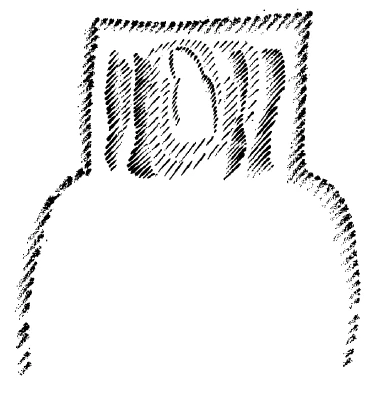
Das nächste Stadium ist, daß gesetzt wird da, wo der Gott nur inkorporiert war in dem gestalteten Worte, zwischen den Chor der wirkliche, reale Mensch, der aber nun den Gott noch darstellte, der vom Chor lernen konnte, der sogar allerlei Instrumente brauchte zur Verstärkung der menschlichen Stimme, um nicht dasjenige von innen herauskommen zu lassen, was eben aus dem Menschen herauskommt, sondern um nachzuahmen dasjenige, was der Chor in der Außenwelt objektiv hinstellte.
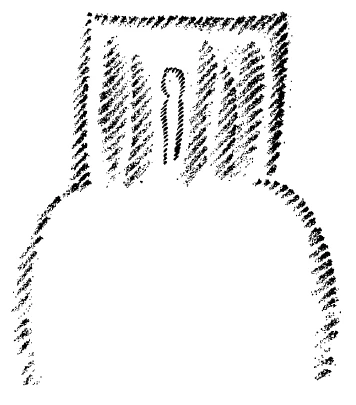
Zunächst sollte der Mensch in seinem Rezitieren nur fortsetzen, was im Chore lag. Und den verständigen Leuten im alten Griechenland wäre das Sprechen, das wir heute auf der Bühne pflegen, gegenüber demjenigen, was der Schauspieler damals mit mächtiger, selbst durch das Instrument verstärkter Sprachentwickelung -— nicht etwa bloß deshalb, weil man im Freien spielte und starke Stimmen brauchte, sondern weil das der Fall war, was ich jetzt auseinandergesetzt habe -, was da wie das Entfalten der Götterstimme auf der Bühne da sein sollte, demgegenüber wäre das, was heute auf unserer Bühne entwickelt wird, dem Griechen als ein Mäusleinpiepsen vorgekommen. Es ist schon so. Denn da stürmte die göttliche Welt durch die Darstellung herein.
Nun aber wurde der Mensch gewissermaßen gewahr, daß das Göttliche in ihm selber ist. Aus der Gottesdarstellung wurde eine Menschendarstellung. Und die notwendige Folge ist, daß der Mensch lernen muß, seine Prosa zu stilisieren, seine inneren Erlebnisse in die Außenwelt und ihre Offenbarung hineinzutragen. Aber da genügt wahrhaftig nicht, daß wir uns so benehmen, wie wir uns im Leben benehmen. Das brauchte man nicht darzustellen. Das hat man wirklich im Leben genug. Und den künstlerisch empfindenden Menschen kann eigentlich die bloße Nachahmung des Lebens nicht interessieren, weil das Leben dann immer reicher ist als dasjenige, was man herausschälen kann.
Betrachten Sie das nur an anderem Künstlerischen als an der Schauspielkunst. Landschaftsmalerei hat wirklich nicht viel Sinn, wenn einer Bäume abmalt mit der Absicht, Bäume abzumalen, um zu zeigen, ob sie Nadeln oder Blätter haben, um oben solche Wolkenformen abzumalen, unten einen Wiesengrund, um die Farben der Blumen wiederzugeben. Man kann das mit künstlerischem Sinn eigentlich nicht anschauen. Warum? Weil es immer schöner ist, draußen in der Natur das anzuschauen. Solche Landschaftsmalerei hat gar keine Daseinsberechtigung. Es ist wirklich immer schöner in der Natur draußen.
Die Landschaftsmalerei beginnt erst einen Sinn zu haben, wenn man zum Beispiel einer Abendstimmung gegenübersteht, der Baum geht einen gar nichts an, aber das Licht, wie es aufgefangen wird vom Baume, das hat eine bestimmte Stimmung, eine Stimmung, die im Momente entsteht, im Momente vergeht, die nicht auf den trockenen, nüchternen Philisterbeschauer einen großen Eindruck macht, aber die geistesgegenwärtig im besten Sinne des Wortes im Augenblicksempfinden festgehalten werden kann. Schaut man dann eine solche Landschaft an, dann schaut man eigentlich die Blickdurchgeistigung eines Menschen in einem Augenblicke an. Man schaut hinüber durch die gestaltete Landschaft in die Seele eines Temperamentes. Denn je nachdem der Mensch sein Temperament hat, schaut die Landschaft aus bis in ihre Farbengebung hinein. Bei einem wirklichen elementaren Künstler wird es wirklich so sein, daß, wenn er selber in seiner Seele eine melancholische Grundstimmung hat, er dann die Schattenseite der Dinge mit ihren schattennuancierten Farbenstimmungen uns entgegenbringen wird. Wenn einer ein innerlich sanguinisches Temperament hat, dann wird das Rötlich-Gelbliche auf den Blättern da tanzen, wo der Sonnenschein auf die Blätter auffällt. Und wenn man einmal gewahr wird in der Welt, daß einer solch ein Rotes, Tanzendes malt im Sonnenschein, und man ihn nachher kennenlernt und er eigentlich ein melancholischer Mensch ist, dann ist er kein Maler, dann hat er das Malen gelernt. Und das ist ein großer Unterschied, ob man ein Maler ist, oder ob man das Malen lernt, obwohl der Maler, der es ist, auch das Malen gelernt haben muß!
Die neueste Zeit hat vielfach daraus den Schluß gezogen, also ist derjenige kein Maler, der das Malen gelernt hat, und derjenige ist ein Maler, der nie etwas gelernt hat. Das ist aber nicht richtig. Ich möchte sagen, will man den wirklichen Maler charakterisieren, so muß man sagen: Er muß ein Maler sein. - Dann geniert man sich ein bißchen und sagt noch dazu: Aber er muß Malen dazugelernt haben. - Wenn man aber so einen sieht, wie ich ihn eben beschrieben habe, dann sagt man, um nicht Anstoß zu erregen, denn Höflichkeit ist eine Tugend: Er hat das Malen gelernt. — Aber im stillen fügt man bei: Aber er ist doch kein Maler.
Ich will nicht gerade mit diesen Dingen vorbildlich wirken, aber ich möchte eben auf Usancen hindeuten, die wirklich bei vielen Menschen deshalb vorhanden sind, weil sie sich ja sonst nicht retten könnten gegenüber den Prätentionen, die an sie herantreten.
Nun also, dasjenige darzustellen, was unmittelbar da ist, dazu ist keine Veranlassung; wohl aber ist alle Veranlassung, daß der Mensch, der auf der Bühne steht als Darsteller, zunächst seinen gewöhnlichen Menschen vergessen läßt und ganz der Mensch wird, der in der Sprachgestaltung lebt, so wie ich es dargestellt habe. So daß man von dieser Sprachgestaltung, wie ich es dargestellt habe, vom schneidenden, vom langsam gezogenen, kurz abgemessenen, von dem rasch hingeworfenen Worte gewissermaßen aurische Konturen um den Schauspieler instinktiv sieht als Zuschauer. Der Schauspieler wird dadurch etwas anderes, als was er im Leben ist.
Bedenken Sie nur einmal, wie bei extremen Fällen Sie da sehen, daß es so gemacht werden muß. Im extremen Falle ist das ja so. Denken Sie sich, man hat auf der Bühne einen Blödling darzustellen. Dazu darf man wahrhaftig nicht blöde sein; und der Regisseur, der einen Blödling durch einen Blödling darstellen läßt, ist wirklich der denkbar schlechteste Regisseur, denn, um einen Blödling darzustellen, dazu gehört die höchste Kunst. Da darf man am wenigsten ein Blödling sein. Da handelt es sich darum, daß man nicht etwa einen Menschen sich aussucht, der sich nur in seiner naturhaften Blödigkeit hinstellt - das wäre naturalistisch das beste -, aber darum handelt es sich, daß, wenn ein Blödling dargestellt werden soll, seine Blödheit darin besteht, daß jener Kontakt zwischen dem sauer, bitter, süß, wie ich es heute im Anfang des Vortrages gesagt habe von der Sprachgestaltung, nicht zustande kommen kann. Er kriegt es nicht fertig, die Brücke hinüber zu schlagen. Und schon der dramatische Dichter muß darauf Rücksicht nehmen, daß der Blödling bei der Empfindung bleibt, nicht zu der aus dem Moralischen heraus folgenden Sprachgestaltung kommt.
Was wird man daher als guter dramatischer Dichter tun - und der Schauspieler muß das, was an solchen Stellen der gute dramatische Dichter tut, aus dem Vollen einsehen -, was wird man da tun? Man wird den Blödling darstellen lassen durch einen Menschen, der als Bühnenkünstler im eminentesten Sinne die Gabe hat, so die Gebärde zu machen, wie ich es gestern und vorgestern beschrieben habe: aus dem inneren Erlebnis heraus in künstlerischer Stilisierung. Da wird er finden, daß er insbesondere die Kunst des Zuhörens entwickeln muß, des Zuhörens mit der Gebärde, gleichgültig, ob einem als Regisseur der Dichter zu Hilfe kommt oder nicht, denn Dichter sind ja in der neuern Zeit auch nicht gerade große Künstler. Aber man kann da zwar nicht «corriger la fortune», wohl aber corriger das Leben, oder die Kunst in ehrlichem Sinne eintreten lassen, indem man den Blödling hinstellt mit den möglichst vollkommenen Gebärden, wie ich sie gestern für den Zuhörer und Zuschauer entwickelt habe, dann aber bei ihm die Gebärde als Grundgebärde hervorrufen lassen, als ob ihm die Umgebung erst sagte, was er, wenn er etwas empfindet, zu sagen hat. Sie kriegen immer den Eindruck des Blödlings auf der Bühne, wenn Sie Gebärden machen lassen, aber er mit offenem Munde möglichst in einer karikierten a-Situation der hinteren Mundwerkzeuge fortwährend auf seine umgebenden Menschen hinschaut, als ob die eigentlich sprechen sollten, nicht er.
Hat einem auch der Dichter keine Vorlage dazu geliefert, so sollte man dennoch als Regisseur, wenn der Blödling dargestellt zu sein hat, als die entsprechende Geste das fordern; und wenn auch etwas ganz anderes gesagt wird, der Blödling kann das so machen, als ob er aus der Rede heraushörte, was er sagen soll zu der Empfindung. Wenn der Blödling immer den Eindruck macht, er ist das Echo der Umstehenden, dazu aber gute Gebärden macht, dann ist die Blödigkeit auf der Bühne fertig. Im Leben geht es nicht so zu.
Und wiederum, wollen Sie den Weisen auf der Bühne darstellen, was die Schauspieler schon lieber tun - ich würde als Schauspieler lieber den Blödling darstellen -, dann müssen Sie in seine Gebärden dasjenige hineinbringen, das ihn womöglich wenig auf die Zuhörer verweist in bezug auf die Auffassung. Er sündigt, wenn er ein Weiser sein soll, dadurch gegen die Lebendigkeit der Gebärde, wie ich gestern und vorgestern vorgeführt habe, daß er diese Gebärde nur immer andeutet und immer etwas hineingeheimnißt von Abweisendem, von derjenigen Gebärde, die ich als die abweisende für das abweisende Wort gezeigt habe. Der Weise geht mit, aber mischt immer in die verstehende Gebärde die abweisende Gebärde. Dann wartet, wenn der Partner ausgesprochen hat, der Weise eine Weile, geht womöglich, nachdem er vorher mit etwas vorgeschobenem Kopf doch sich dem Partner geneigt hat, mit dem Kopf etwas zurück, und mit den Augenlidern auch etwas zurück. Dadurch erhält der Zuschauer instinktiv immer den Eindruck, er will nicht recht eingehen auf den Partner, er will das Wesentliche aus sich selber holen. Und man bekommt dann als Zuschauer den instinktiven Eindruck, er redet viel mehr aus seiner Erinnerung heraus als aus dem Zugehörten. Diesen Eindruck muß man beim Weisen immer bekommen, sonst ist die Sache nicht stilisiert.
Sie werden den entgegengesetzten Gestus haben müssen, wenn Sie auf der Bühne die Tante auftreten haben, die eben vom Kaffeeklatsch kommt und die Usancen des Kaffeeklatsches irgendwie in einer anderen Situation fortsetzt. Denn die wird müssen mit einer starken Abwehrbewegung dasjenige begleiten, was der Partner spricht, weil ihr nichts recht ist, und sie wird dann mit der ganz echten Begleitgebärde, wie ich sie dargestellt habe für die einzelne Wortgestaltung, einfallen müssen in dem Momente, wo der Partner noch die letzte Silbe sagt, damit man das Gefühl hat, sie braucht gar nicht nachzudenken, sie weiß von vornherein, wenn ihr die Situation entgegentritt, daß sie irgendwie dies oder jenes zu sagen hat; sie muß schon anfangen mit Gebärde und Wortgestaltung, während die letzte Silbe gesprochen wird. Nur muß man noch leise anklingen lassen das Sprechen der letzten Silbe, damit die Sache nicht undeutlich wird, aber man muß einen großen Wert darauf legen, daß die Sache in der Weise, wie ich es sagte, stilisiert, denn die Tante, die vom Kaffeeklatsch kommt, ist ja gerade das Gegenbild des Weisen. Es kann auch der «Onkel» erscheinen, der vom Dämmerschoppen kommt, nur muß dann in diesem Falle gegenüber dem Weiblichen das Männliche betont werden. Und während die Tante, die vom Kaffeeklatsch kommt, mehr mit den Fingern vorrückt bei der letzten Silbe, rückt der Onkel, der vom Dämmerschoppen kommt, mehr mit der ganzen Hand oder mit dem Arm vor, aber er wird auch anfangen bei der letzten Silbe. Das wird das Stilisierte sein.
Wir wollen dann morgen diese Betrachtungen fortsetzen.
10. The Mysterious Nature of Dramatic Art
Today I would like to add a few things to my previous observations, which will lead us to what I already hinted at yesterday, namely a certain esoteric deepening of the whole concept and the involvement of those involved in theater in this theater. We cannot properly perceive our task as participants — we will see that it is somewhat different for the audience — our artistic and human task in relation to the art of acting, if we do not look, on the one hand, into the deeply rooted nature of this art of acting in human beings as they are today, and, on the other hand, into human development in its current phase in which we live.
The actor must have the opportunity to feel his way into the way in which the artistically crafted, spoken word can be a revelation of the essence of the whole human being. He must gain a spiritual understanding of his profession in a certain sense precisely through this deeper insight. Then, through this more spiritual understanding of his profession, he will also be able to muster the necessary inner energy to shape the individual duties of his profession in an increasingly artistic manner, right down to the details of his stage performance.
Let us consider the following: an essential part of consonantal speech is the involvement of the palate, tongue, lips, and so on in the formation of the word. On the other hand, we can look deeply into how the word, in order to become essentially full of content internally, intercepts the experience, as it were, in precisely those regions of the human being, such as the designated organ regions. One can do this if one is not afraid to first look at things as they must be looked at in the more tangible realm, and then move on to the more spiritual realm.
Let us therefore start from the ordinary physical sense of taste, for it is not unnecessary to describe the human perception of art as taste. When we speak today of taste in art and taste in cucumbers or roast veal, we no longer feel the necessity that led people to apply the word taste to both. But consider the fact that when a person enjoys something bitter—that which is called bitter in food or drink, the very ordinary material bitterness— then the task of providing the sensation of bitterness is assigned to the back of the tongue and the palate, so that at the moment when the bitter taste passes from your mouth into your esophagus and you have the experience, the entirely material, physical experience of bitterness, your palate, in conjunction with the tongue and the back of the tongue, is engaged in this matter.
Now you can also enjoy sourness, that which brings you into the experience of sourness. Here again, you mainly assign the task of conveying the sensation of sourness to the edge of your tongue; it is busy while you have the experience of sourness. And when you have the sensation of sweetness, the tip of your tongue is primarily busy. So we see how our relationship with the outside world is strictly governed by the laws of the organism. We cannot somehow befriend the tip of our tongue so that it conveys sour or bitter tastes to us; it remains inactive when it comes to sour or bitter tastes, as it has the distinctive characteristic of only being active when we let something sweet pass through our mouth.
Now, it is not without reason that we apply the terms sour, bitter, and sweet to moral impressions. We even speak in a very decisive manner of the sour, the bitter, and the sweet in moral impressions. I say “in a very definite way” because, for example, we will not necessarily be inclined to see something sour in the words spoken by another person. However, based on a completely natural instinct, we will refer to their facial expression as a sour face. We will not easily find a sentence sour, but we will find a face sour extremely easily.
Now, you see, what causes us to describe a face as sour stimulates exactly the same areas at the back of the tongue, near the throat, to be somewhat more active, just as when we swallow vinegar. It is an inner relationship that instinctively asserts itself in humans. And at that moment, the unconscious knows exactly the relationship between vinegar and the face. Vinegar, however, has the peculiarity of claiming the more passive small organs of the tongue for itself. The face of the “aunt” on certain occasions has the peculiarity of claiming the more active parts of the same area.
We must say: we see here the mysterious transition from sensation to language. This transition is definitely there. The moral excites language in the same way that the physical excites sensation. Once you know this, you will also gain the ability, I would say, to immerse yourself in the deeper regions of action. One will really come to know that it is good, when I have to utter some sentence that artistically refers to my aunt's sour face, to have a clear sensation, an empathy, an aftertaste of how vinegar tastes in my soul as an attentive observer of life. And that helps. There is a path leading from one to the other.
If I have to say something about someone reproaching me, or if I have to listen to a reproach directed at me, then it will be good to instinctively arouse in the depths of my soul the empathy, so to speak, the aftertaste of wormwood within me.
If, for example, I have to portray a court counselor who is approached by someone who wants a position—which can also happen in a play—and who behaves accordingly, saying flattering things and so on, then it will be good if, when I have to speak, I maintain the aftertaste I have when I eat sugar—this will greatly support everything else. Even when listening, my gestures will instinctively take on the right form if I imagine the aftertaste of sugar in my mind.
Today, one might say that when something like this is expressed, one should take it quite realistically, materially, naturalistically. But one only really gets the inspiration to express things in this way when one considers the other side, which I have also hinted at, the historical development of what has led to our theater today. For in the final analysis, the development towards our drama still lies in its beginnings, in its germ, in everything that is perceived as mystery. And one cannot gain a dignified understanding of the art of drama unless one can go back to the art of mystery. On the one hand, the art of mystery sought to trace all representation back to those impulses that penetrate human beings from the spiritual world. On the other hand, however, it also sought to trace these spiritual impulses to such material details that those who were to perform in the ancient mysteries were prepared by vinegar or something similar, by wormwood and so on, to find words, facial expressions, and gestures. One only begins to take the matter seriously artistically when one allows oneself to seek out artistic expression in physical experience. Otherwise, one remains stuck with a performance that, by its very nature, must necessarily go to the fingertips — I have also seen people sticking out their tongues on stage, which goes to the tip of the tongue —, stuck with the superficial, if one does not go that far.
Now, however, in what we often encounter today as primitive acting, as acting that belongs to the realm I mentioned recently and that one may encounter in exhibitions, for example, such as the primitive representational art of the Orientals at the current London exhibition, we encounter something where people — we know that this means even more primitive stages of dramatic art — do not really advance to the mystery type. But let us leave that aside for now and mention it later. Let us first seek the origin of ordinary drama in the art of mystery, so that from this conception of the mystery character of ordinary drama, seriousness can enter into the actions of the present-day actor.
Basically, the mystery was initially only supposed to be represented by humans, how the gods influence human life. And if much of what Aeschylus destroyed still existed today, then one would not immediately see how the oldest mystery art was, but one would already be able to have echoes of this ancient mystery art. One would be able to see that the subject matter was initially approached with a certain sacred reverence. For what was to be depicted were not human events on earth, events among human beings on earth, but rather supersensible events taking place among the gods in relation to human life. What happens in the supersensible world, among supersensible beings, was to be depicted in its effect on the earthly world.
But in the earliest times, people were quite reluctant to depict this directly and vividly. Rather, they felt that they had to do everything possible to ensure that a kind of schema of the gods themselves was present on stage. Everything on stage had to be arranged in such a way that the audience had the feeling that the gods themselves had descended onto the stage with part of their being.
How did they seek to achieve this? They sought to achieve this by initially having no acting characters at all, no actors who portrayed something, a god or a human being, but instead choirs, choirs which, in a form of speech that lies between ordinary speech and singing, performed a special kind of artistic recitative accompanied by instruments; that in this way, in a stylization far beyond the ordinary, a real work of art was created in the sound, in the syllables, in the sentence structures, which floated there on the stage, purely formed from what was conjured up from the musical, the plastic, the pictorial words before the audience or listeners who were there. And according to these ancient concepts, the listener had not only the idea, but the real perception: these choirs did everything they developed in order to give the gods the opportunity to be present in the musical-plastic word formation itself.
Thus, musical, plastic, and pictorial word formation had reached a level of individualization in which it could signify entire divine beings. This was truly cultivated in the mysteries of ancient times. And in the performance, what emerged was what existed between what was happening on stage and what was being experienced in the auditorium, and, I would say, like an astral aura floating through the entire space: what we today might call fear of the divine presence, reverence, awe. People felt themselves in the presence of a supersensible world. This feeling should be there.
And connected with it should be the feeling stirring within the human being to live with this world of gods in his moral, in his spiritual behavior. Experiencing the divine was the second intention of these ancient mysteries. Fear of the gods in the best sense of the word and experiencing the divine.
And you see, gradually people's ability to see anything at all in the created, which is not natural, declined. And the consequence of this was that what initially lived only in words, in sculptural, pictorial, musical words, in sculpted recitative, in highly stylized form, made it necessary for people to stand up themselves in order to represent the contours that were no longer perceived in pictorial, sculptural, musical words, the contours of the gods, through their own contours.
But it must not be forgotten that he is a god. And look at the Egyptian gods. As a rule, unless there was another intention, they were not given bland human faces – but I ask you to remember from earlier lectures in this course what I mean by this – they were not given bland human faces. The Egyptian gods, especially the higher ones, that is, those who go more into the spiritual, had animal faces, holding fast to that which was to point to the eternal, not the eternally mobile human face. This was to be expressed through their other gestures; the enduring should also be present in the enduring of the physiognomy. A human face cannot be left permanently immobile. It then takes on the expression of the dead, of the rigid. If one wants to embody the enduring, which is characteristic of the spiritual, in contrast to the changing for the sensual world, then one must necessarily resort to the animal face.
Thus, in Egyptian cults, we see on the one hand the actual supernatural gods with animal faces. Thus, when humans appear on stage, we see them wearing masks reminiscent of animals. Things have developed from the inner course of spiritual life.
But at first, humans did not represent humans; they represented gods, mostly the god closest to humans, Dionysus. And so the chorus was joined in the middle by actors; first one, then two, who entered into dialogue, and then more and more. Only when one senses the magical breath of its origins in the entire dramatic art of performance can one still present it to the audience in the right way today, for then one knows how the art of acting emerged from the cult, which also seeks to represent what lies in the supernatural in the sensory world.
This is still tangible in the Middle Ages, my dear friends. If we go back to the times before the worldliness of stage acting took hold, we find that theatrical performance was only an appendage to the cult. We see how the Christmas cult, which is supposed to lead people up to the contemplation of the divine, so to speak, is continued in a certain situation in or in front of the church, transformed into Christmas plays, how acting is an extension of the cult practiced in the church, how the clergyman who celebrates the cult himself appears afterwards as an actor and participates in the Christmas plays.
It is no longer based on the same sacred feeling as it was in the ancient mysteries, where the spectacle was integrated, was part of the mystery, belonged directly to it, but there is already something separate in the two; yet it is still the case that one can clearly feel the connection between them. And so it is in the other festive seasons.
And when we see this sacred origin of the spectacle on the one hand, we will also find how the other element, I would say the more worldly element, which is no longer so closely connected with the cult, comes into play. It had a similar origin. At first, people only felt the divine in the great outdoors, with which they were connected, the god in the clouds, the god in the lightning and thunder, but above all, the god coming in when objectively presented by the choir through the shaped and musically modulated word.
But it was precisely through this that humans gradually learned to perceive the other mystery, that the divine, which comes to us from worlds far away, echoes from within, like an echo of the divine that dwells within ourselves. And from this, humans were then seized by a feeling that could be characterized in the following way:
The choir originally prepared the ground through what it produced for the artistically shaped word, in which God was not to incarnate, of course, but to be incorporated. That was the mystery play, the original one. Now, due to human inadequacy, the actor was placed there, who nevertheless represented the god. Gradually, in the course of historical development, it was felt that even when man represents his deepest inner self, he represents something divine. Man came to realize that if he represents the divine to the outside world, then he can also represent what is divine within himself. And from this, from the portrayal of gods in the art of acting, came the portrayal of the innermost human being, the portrayal of the soul. And naturally, the need arose to incorporate the innermost human experience into speech formation, to incorporate this same innermost human experience into gesture formation.
From this, in the times when instinct was still significant, everything that I have described in recent days developed, everything that must be renewed, that must be taken up again, so to speak, with all the will to dramatic technique, on the one hand even to the point of discus throwing, on the other hand to the point of the aftertaste of sour and bitter. We must go so far as to take up again what must underlie the portrayal of human beings.
An image, my dear friends, could, if you contemplate it meditatively, bring to mind how the art of acting developed, and then give you the impetus to delve into such things as I have described in detail over the past few days, and which I would now like to illuminate from a more general point of view.
First of all, if we consider the main stage design – which, of course, can only be conceived schematically when thought of in terms of older times – we have the choir, which forms the pictorial, plastic, musical word in the middle of the stage. Within it, God is felt. God appears in the pictorial, musical, plastic word. God wants to appear to the audience (see drawing on page 232).
The next stage is that, where God was only incorporated into the designed word, between the choir and the real, actual human being, who now represented God, who could learn from the choir, who even needed all kinds of instruments to amplify the human voice, not to let what comes from within the human being come out, but to imitate what the choir objectively presented in the outside world.
At first, people were only supposed to continue in their recitation what was in the choir. And to the intelligent people of ancient Greece, the speech we use on stage today would be compared to what the actors of that time used with powerful speech development, amplified even by the instrument — not merely because they performed outdoors and needed strong voices, but because that was the case, as I have now explained — what should have been like the unfolding of the voice of the gods on stage, what is developed on our stage today would have seemed to the Greeks like the squeaking of a mouse. That is how it is. For the divine world stormed in through the performance.
But now man became aware, in a sense, that the divine is within himself. The representation of God became a representation of man. And the necessary consequence is that man must learn to stylize his prose, to carry his inner experiences into the outer world and its revelation. But it is truly not enough for us to behave as we do in life. There is no need to portray that. We have enough of that in real life. And people with artistic sensibilities cannot really be interested in the mere imitation of life, because life is always richer than what can be extracted from it.
Consider this in terms of art other than acting. Landscape painting really doesn't make much sense if someone paints trees with the intention of painting trees to show whether they have needles or leaves, to paint cloud formations above, a meadow below, to reproduce the colors of the flowers. You can't really look at that with artistic sensibility. Why? Because it is always more beautiful to look at it outside in nature. Such landscape painting has no raison d'être. It is really always more beautiful outside in nature.
Landscape painting only begins to make sense when, for example, you are faced with an evening atmosphere. The tree is of no concern to you, but the light as it is captured by the tree has a certain mood, a mood that arises in the moment, passes in the moment, does not make a great impression on the dry, sober philistine observer, but can be captured in the best sense of the word in the feeling of the moment. When you look at such a landscape, you are actually looking at the spiritualization of a person's gaze in a moment. You look through the designed landscape into the soul of a temperament. For depending on a person's temperament, the landscape looks into its very colors. With a truly elemental artist, it will really be the case that if he himself has a melancholic mood in his soul, he will then present us with the shadow side of things with their shadow-nuanced color moods. If someone has an inner sanguine temperament, then the reddish-yellow tones will dance on the leaves where the sunshine falls. And once you become aware in the world that someone paints such a red, dancing picture in the sunshine, and you get to know him afterwards and he is actually a melancholic person, then he is not a painter, he has learned to paint. And there is a big difference between being a painter and learning to paint, even though the painter who is a painter must also have learned to paint!
In recent times, many have concluded that someone who has learned to paint is not a painter, and that someone who has never learned anything is a painter. But that is not correct. I would say that if you want to characterize the real painter, you have to say: He must be a painter. - Then you feel a little embarrassed and add: But he must have learned to paint. - But when you see someone like the one I just described, you say, in order not to cause offense, because politeness is a virtue: He learned to paint. — But quietly one adds: But he is not a painter after all.
I do not want to set an example with these things, but I would like to point out customs that are really present in many people because they would otherwise not be able to save themselves from the pretensions that come their way.
Now then, there is no reason to portray what is immediately there; but there is every reason for the person standing on the stage as an actor to first make us forget his ordinary self and become entirely the person who lives in the art of speech, as I have described. So that, as I have described, the audience instinctively sees auric contours around the actor in this speech formation, in the sharp, slowly drawn, briefly measured, and quickly thrown words. The actor thereby becomes something other than what he is in life.
Just consider how, in extreme cases, you see that this is how it must be done. In extreme cases, that is how it is. Imagine you have to portray a fool on stage. To do so, you really must not be stupid; and the director who has a fool portrayed by a fool is truly the worst director imaginable, because portraying a fool requires the highest artistry. That is the last thing you should be: a fool. It is not a matter of choosing a person who simply presents himself in his natural stupidity – that would be the best in naturalistic terms – but rather, when a fool is to be portrayed, his stupidity consists in the fact that the contact between the sour, bitter, and sweet, as I said at the beginning of my lecture today, cannot be established in speech formation. He cannot manage to build the bridge. And the dramatic poet must take into account that the fool remains with his feelings and does not arrive at the speech formation that follows from morality.
What, then, will a good dramatic poet do—and the actor must fully understand what the good dramatic poet does in such situations—what will he do? One will have the fool portrayed by a person who, as a stage artist in the most eminent sense, has the gift of making the gesture as I described yesterday and the day before: out of inner experience in artistic stylization. There he will find that he must develop in particular the art of listening, of listening with gestures, regardless of whether the poet comes to his aid as a director or not, for poets in modern times are not exactly great artists. But although one cannot “correct fortune,” but one can correct life, or let art enter in an honest sense, by presenting the fool with the most perfect gestures possible, as I developed them yesterday for the listener and viewer, but then letting him evoke the gesture as a basic gesture, as if his surroundings first told him what he has to say when he feels something. You always get the impression of the fool on stage when you let him make gestures, but he looks at the people around him with his mouth open, as if in a caricatured a-situation of the rear mouth organs, as if they should actually be speaking, not him.
Even if the poet has not provided a template for this, as a director, if the fool is to be portrayed, you should still demand the appropriate gesture; and even if something completely different is said, the fool can do so as if he were listening to the speech to hear what he should say about the feeling. If the fool always gives the impression that he is the echo of those around him, but also makes good gestures, then the foolishness on stage is complete. In real life, it doesn't work that way.
And again, if you want to portray the wise man on stage, which actors prefer to do – as an actor, I would prefer to portray the fool – then you must incorporate into his gestures that which, as far as possible, does not refer him to the audience in terms of understanding. If he is supposed to be a wise man, he sins against the liveliness of the gesture, as I demonstrated yesterday and the day before, by only ever hinting at this gesture and always insinuating something dismissive, something from the gesture that I showed as the dismissive one for the dismissive word. The wise man goes along with it, but always mixes the dismissive gesture into the understanding gesture. Then, when the partner has spoken, the wise man waits a while, possibly leaning back slightly with his head, after having previously leaned toward his partner with his head slightly forward, and also leaning back slightly with his eyelids. This instinctively gives the viewer the impression that he does not really want to engage with his partner, but rather wants to draw on his own inner resources. And as a viewer, one then gets the instinctive impression that he is speaking much more from his memory than from what he has heard. One must always get this impression from the wise man, otherwise the matter is not stylized.
You will have to use the opposite gesture when you have the aunt on stage who has just come from the coffee party and is somehow continuing the customs of the coffee party in a different situation. For she will have to accompany what her partner says with a strong defensive movement, because she is not happy with anything, and she will then have to intervene with the very genuine accompanying gesture, as I have described it for the individual word formation, at the moment when her partner is still saying the last syllable, so that one has the feeling that she does not need to think at all, she knows from the outset, when she encounters the situation, that she has to say this or that somehow; she must already begin with gestures and word formation while the last syllable is being spoken. One must only let the last syllable be heard softly so that the matter does not become unclear, but one must attach great importance to the matter being stylized in the way I described, because the aunt coming from the coffee party is precisely the opposite of the wise man. The “uncle” who comes from the evening drink can also appear, but in this case the masculine must be emphasized in contrast to the feminine. And while the aunt coming from the coffee party moves forward more with her fingers on the last syllable, the uncle coming from the evening drink moves forward more with his whole hand or arm, but he will also start on the last syllable. That will be the stylized version.
We will continue these observations tomorrow.